
Last updated October 16, 2026
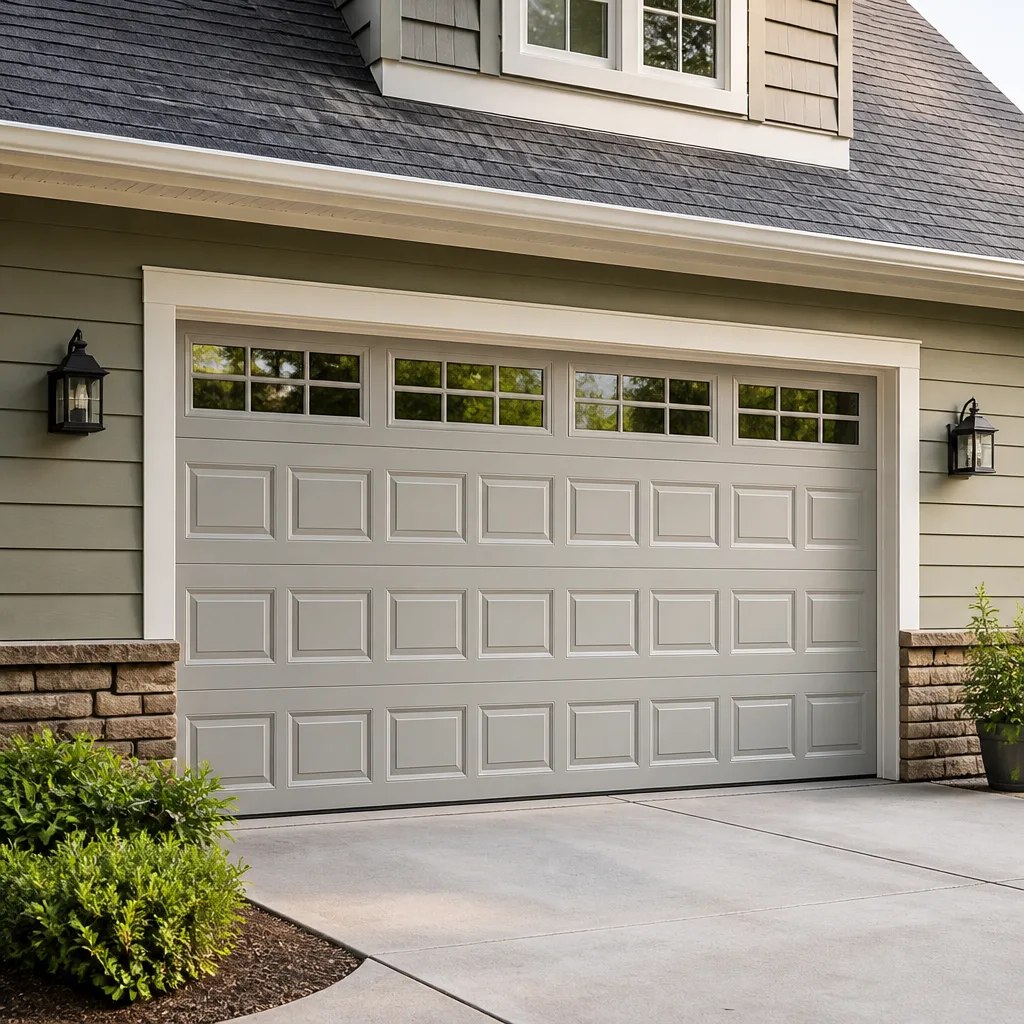 Raised-panel steel
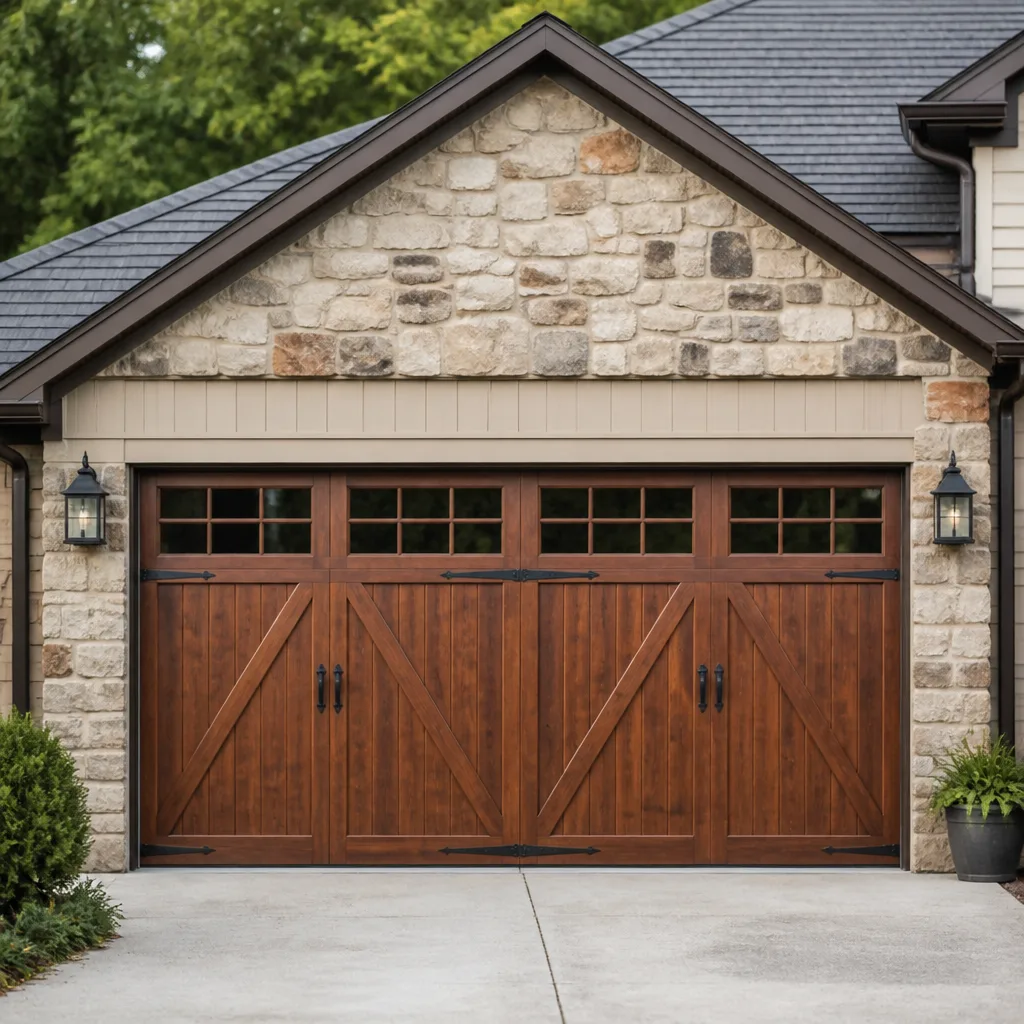 Carriage house
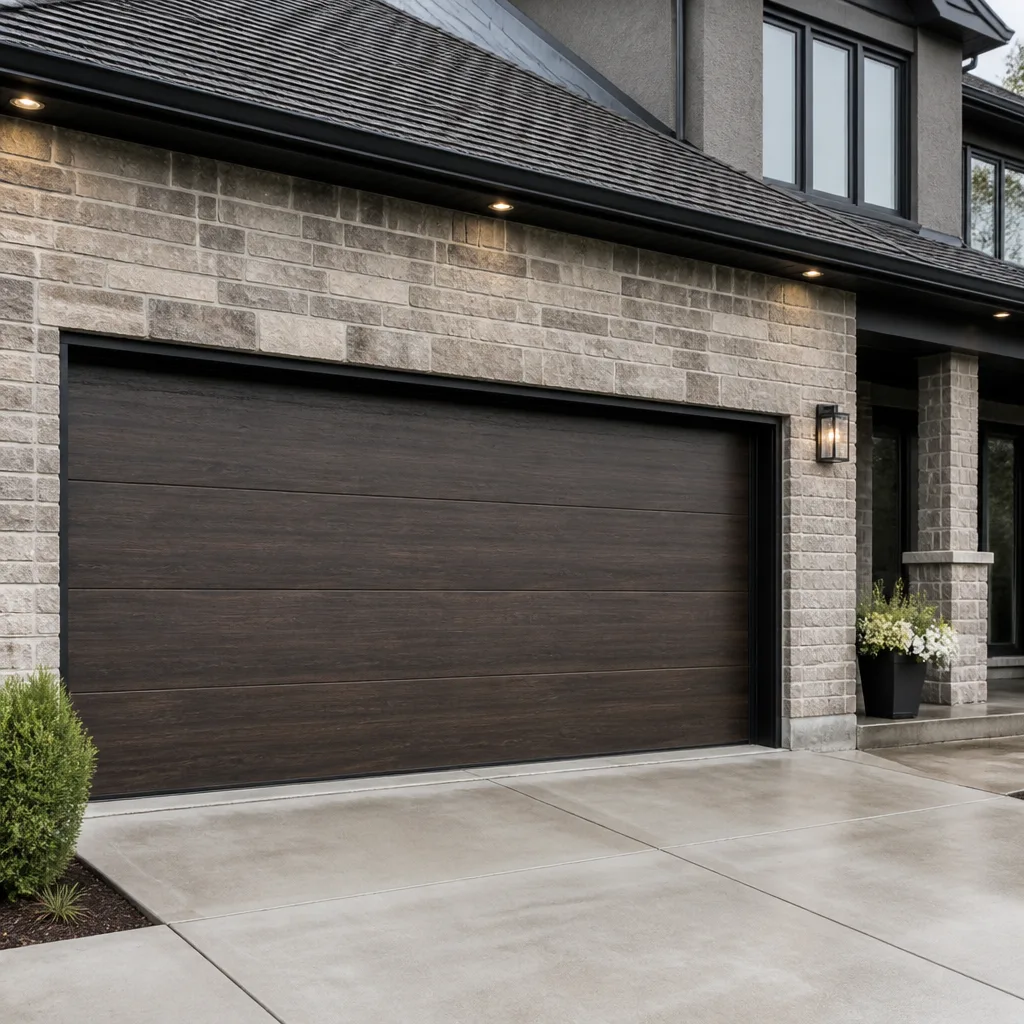 Modern flush
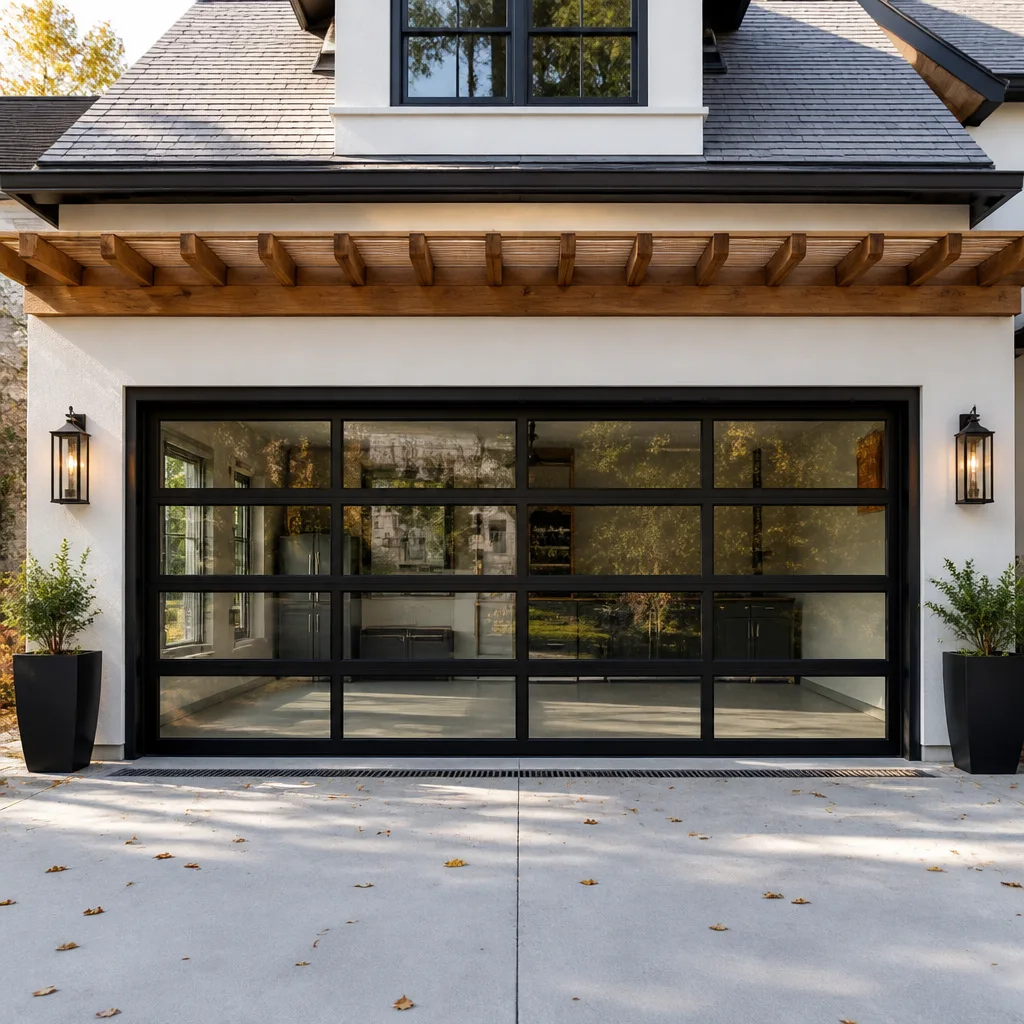 Full-view glass
 LiftMaster openers
 Chamberlain openers
Full 25-point door and opener safety check with every visit - springs, cables, rollers, tracks, and your LiftMaster or Chamberlain opener included
You get a price before we start. It does not change when the truck arrives.
Get your free estimateGarage Door Warning Signs: A Dallas Homeowner’s Reference Guide
A grinding noise on the way down is not the same problem as a grinding noise on the way up, but to most Dallas homeowners they’re both just “the door making a noise.” That single blind spot is why technicians so often find secondary damage that a timely call would have prevented. This guide translates specific symptoms into specific diagnoses, building on our Complete Guide to Garage Door in Dallas. You’ll learn which sounds mean a $12 roller replacement and which mean a torsion spring about to let go, which visual signs are cosmetic and which are structural, and how to describe what you’re seeing to a dispatcher so the right technician shows up with the right parts the first time.
Quick Answer
Garage door warning signs fall into three categories: sounds (grinding, rattling, squealing, snapping), visuals (cable slack, uneven gaps, panel bowing, rust at stress points), and behavior (slow travel, unexpected reversing, one side sitting lower than the other). A rattle or squeak can generally wait a week or two. A snapped cable, a door that reverses on its own, or a loud bang from the spring area needs same-day service, because those are failure events, not warnings. If you’re unsure which category you’re in, call Garage Door Repair in Dallas and describe the symptom in the terms in this guide.
Styles & brands we work with
Table of Contents
- Sounds: Grinding, Rattling, Squealing, and the One You Never Want to Hear
- Visual Signs: Cables, Gaps, Panels, and Rust
- Behavioral Signs: Speed, Reversing, and Balance
- What Can Wait 30 Days vs. What Needs a Technician Today
- How to Test Auto-Reverse and Balance Safely
- Dallas-Specific Triggers: Hail, Heat, and Humidity
- How to Describe a Symptom to a Dispatcher
- Common Mistakes to Avoid
- When to Call a Professional
- Frequently Asked Questions
Sounds: Grinding, Rattling, Squealing, and the One You Never Want to Hear
Quick Answer: A rattle is loose hardware. A squeal is a dry or worn roller. A grind is metal-on-metal contact, usually a failing roller or a track misalignment. A snap followed by a bang is a spring failure and requires a technician immediately.
Most garage doors make some noise, especially as they age. The diagnostic value is in the character of the sound and when it occurs in the travel cycle.
Rattling (metallic, loose, like a can of bolts)
Rattling on a garage door almost always means fasteners have backed out from years of vibration. Bolts holding the track brackets to the wall, hinges connecting the panels, and roller brackets loosening over time are all common in Dallas homes where the soil expands and contracts with moisture swings, subtly shifting the framing the tracks are mounted to. A rattle is a warning sign, but not an emergency. It becomes one if the door starts visibly shaking during travel, which means the loose hardware is now fighting the door’s weight instead of holding it in place.
Squealing (high-pitched, like a dry bearing)
Squealing is usually a roller. Rollers wear out, and nylon rollers lose their smooth surface while steel rollers fatigue at the bearing. A squeal that comes and goes with humidity is often the roller shaft squeaking against a hinge. Replacing a roller is a low-cost repair: most roller replacements in Dallas run $15 to $45 per roller for parts, with labor typically making the total between $90 and $180 depending on how many rollers are replaced and whether they’re standard or high-cycle. It’s a repair that can generally be scheduled, not treated as an emergency.
Grinding (rough, like stones in metal)
Grinding is metal-on-metal contact and it is the sound that separates a minor repair from a cascading one. The location matters more than the volume. A grind from the roller area on the way up usually means a roller is flat-spotted and dragging instead of rolling. A grind from the same area on the way down, especially with visible shaking, often means the track has shifted and the roller is scraping. In our experience across Dallas, grinding doors that run for another month typically damage the track to the point that a simple roller swap becomes a track realignment or replacement, roughly two to three times the original quote-exactly the kind of escalation our Seasonal Garage Door Care for Dallas guide helps prevent.
The snap and bang
This is the sound of a torsion spring breaking. The spring is the thick coiled assembly mounted above the door that bears most of the lifting load. They are rated for a specific cycle count, usually 10,000 cycles on standard springs, and when they fail they release that stored tension in a single moment. If you hear a loud bang from the garage and the door will not open, or opens only a foot with the opener straining, that is a snapped spring. Do not continue pressing the opener. The door is now dead weight and an opener not designed for that load can burn out within seconds. This requires same-day service. Nothing else in this guide makes that demand, but a snapped spring in Dallas, where most homes use their garage as the primary entrance, is a door that doesn’t close and doesn’t lock.
Visual Signs: Cables, Gaps, Panels, and Rust
Quick Answer: Cable slack is never normal and needs service within days. An uneven gap at the bottom of a closed door means a spring or cable issue on one side. Panel bowing is usually cosmetic until it splits or admits water. Rust at hinge points is an early warning for metal fatigue.
Cable slack or fraying
Look at the cables running up both sides of the door, the steel wires that connect the bottom brackets to the drum above. They should be taut at all times, even when the door is open. If one cable hangs loose while the door is open, or has visible fraying, that cable has jumped or is about to. A frayed cable is an accident in waiting: these cables are under hundreds of pounds of tension and when they fail, the door can drop suddenly. Cable repair work on a standard two-door system in Dallas typically runs $150 to $275 per side, depending on cable type and whether the drum needs replacement too. This is a repair to schedule now, not in a month.
Uneven gaps or a door that sits crooked
Close the door and look at the bottom seal. If one side touches the floor and the other leaves a visible gap, one of two things has happened: a spring on one side failed or weakened, or a cable slipped a groove on its drum. Either way, the door is lifting unevenly, and every cycle puts twisting stress on the panels and hinges. A door that closes unevenly in Dallas during summer heat often gets blamed on the concrete shifting, and occasionally that’s the cause. But the more common cause is spring decay on one side. A technician with a laser level or a straight edge can tell you which within a few minutes.
Panel bowing or separation
Panels bow outward or inward when the door has been closing against an obstruction over time, when the springs are over-tensioned, or when the door was struck. Minor bowing is cosmetic. Separation at the panel joint, where you can see daylight or feel a draft between panels, is structural. On insulated doors common in Dallas subdivisions, a separated joint admits conditioned air loss and lets heat into the garage, which then radiates into the house. A panel replacement or a strut reinforcement is typically a scheduled job, not a same-day emergency, unless the door no longer closes completely.
Rust at hinge and bracket points
Surface rust on steel galvanized hardware is cosmetic and can be treated. But rust that penetrates at the hinge pin, or that has eaten through the bracket where it bolts to the door, is a load-bearing failure developing in slow motion. In Dallas, the combination of heat and occasional heavy storms accelerates rust on doors that were installed with lower-grade hardware or where the powder coating has chipped. Inspect the bottom two hinges first; they carry more load than any other point on the door.
Behavioral Signs: Speed, Reversing, and Balance
Quick Answer: A door that travels slower than it did a year ago is overworking either the opener or the springs. A door that reverses on its own is a sensor or force-setting problem. A door that sits crooked when open means a balance problem that is chewing through springs and rollers faster than a properly balanced door.
Behavior is the most overlooked warning category because the changes are gradual. You won’t notice a door that’s 10 percent slower if the decline took six months. But your opener noticed, and so did the springs.
Slow travel
An opener has a motor with a rated duty cycle. If the door’s springs are weak, the opener compensates by pushing harder and running longer, which shortens its life. A door that used to open in 10 seconds and now takes 14 is telling you something about the springs or the rollers, not the opener motor. Replacing springs restores speed and stops the opener from working at the red line. Spring replacement on a standard double door in Dallas typically runs $180 to $380 depending on spring size, cycle count rating, and whether you upgrade to high-cycle springs rated for 20,000 cycles or more. That upgrade matters in Dallas, where garages get opened three to four times per day on average versus the national two, because the garage is often the main entry point in the summer when the front door is padlocked against the heat.
Unexpected reversing
An opener reverses when the safety sensors at the base of the track read an obstruction, or when the force setting trips because the door is meeting too much resistance. If the sensors are clear but the door still reverses, especially at a specific point in the travel, that’s a track problem or a section of the door that’s binding. It is not a “sensor being finicky.” A door that reverses unpredictably is a safety system trying to do its job against a problem the door is having. It should be diagnosed, not disabled. Disabling or bypassing the auto-reverse sensors to “get it to work” is illegal under federal law and it’s dangerous, especially for kids and pets.
Balance drift
Disconnect the opener (using the red release handle) and manually lift the door to about waist height. A balanced door holds that position. If it drifts up, the springs are over-tensioned. If it falls, they’re under-tensioned or one spring is failing. This simple test tells you more about spring health than any visual inspection. Run it every time you change your air filters, which is roughly every three months in Dallas, more often during summer wildfire and dust season. Balance that drifts month over month is the earliest warning of spring fatigue, earlier than noise, earlier than visual wear.
What Can Wait 30 Days vs. What Needs a Technician Today
Quick Answer: Rattle, squeal, minor rust, and cosmetic panel bowing can wait 30 days and should be scheduled. Cable slack, uneven closing, sudden speed changes, and any grinding with visible movement need service this week. A snapped spring, a dropped cable, a door that will not open or close, or any door that fell need service today.
Wait and schedule (30-day window)
- A Rattle: Loose fasteners. Schedule a tune-up. Tightening is included in a standard service call.
- A Squeal: Worn roller. This degrades but does not usually fail catastrophically within a month.
- Surface rust: Treat it, paint it, and have the affected hinge checked at your next service.
- Cosmetic panel bowing: If the door still opens and closes smoothly and seals at the bottom, you have time.
- Slow travel, minor: A 15 percent speed loss over a year is a warning, not an emergency. Get it diagnosed, not ignored.
Schedule this week
- Cable slack or visible fraying: This is a failure in progress. Do not wait.
- Uneven closing or a door that sits crooked: Every additional cycle worsens the underlying problem.
- Grinding that shakes the door visibly: You are damaging track, rollers, and hinges each time it runs.
- Sudden speed or force changes: The opener is compensating for something structural. That something is getting worse.
- Auto-reverse that trips repeatedly at the same spot: The safety system is telling you the door is binding.
Call today
- Snapped torsion spring (a loud bang, then the door stays down or opens partially): The door is down until the spring is replaced.
- Dropped cable with the door stuck partially open: The door can fall. Do not stand under it. Do not try to close it manually.
- Door fell or dropped several inches during travel: Shut the opener off at the wall button and leave the door alone.
- Door that will not open or close at all: In Dallas, a garage that won’t close is an open invitation. This is a security issue, not just a mechanical one.
How to Test Auto-Reverse and Balance Safely
Quick Answer: The auto-reverse test uses a 2×4 laid flat under the door. The balance test uses the red release handle and your hands. Both take under five minutes and give you a baseline reading to compare against later. Neither requires tools beyond a board and your own strength.
These two tests are the equivalent of a blood pressure reading for your garage door. They’re safe when done as described, and they’ll give you hard data when you call a technician. If either test fails, write down what happened and call.
The auto-reverse test (meets federal safety standard)
- With the door open, lay a 2×4 flat on the floor directly under the center of the door opening.
- Close the door using the wall button, not the remote. The door should contact the board and reverse within two seconds.
- If the door does not reverse, or closes and crushes the board, stop using the opener immediately. This is a safety system failure and it means the door will not stop for a child or a pet.
- Disconnect the opener using the red release handle and leave the door manual until a technician repairs the auto-reverse. A door with a failed auto-reverse is more dangerous than a door with no opener at all, because it gives the appearance of being automated and safe when it isn’t.
This test is mandated by federal regulation for a reason. Run it quarterly. In Dallas, summer heat can warp the sensor bracket alignment subtly enough to trip the reverse function inconsistently, which is why baseline readings matter: if the door reversed on the 2×4 reliably in March and begins failing in July, the problem is environmental or hardware, and the fix is different.
The balance test
- With the door closed, pull the red release handle to disconnect the opener. The door is now manual.
- Lift the door by its handle or rails to waist height. A balanced door will stay at waist height with no support from your hands. Let it go gently.
- If it drops, the springs are under-tensioned or one spring has failed. If it shoots up, the springs are over-tensioned.
- Lift the door to full open, then lower it to waist height again and let it go. The behavior should be consistent. If the door tilts to one side while in your hands, that’s uneven spring or cable tension.
- Reconnect the opener by pulling the release handle until it clicks, then run the opener one full cycle to re-engage.
Both tests take minutes and neither should make you nervous. If the door is heavy, drops, or tilts, call a technician with those exact observations. You’ve just done the diagnostic work that usually takes the first fifteen minutes of a service call.
Dallas-Specific Triggers: Hail, Heat, and Humidity
Quick Answer: Hail makes a sharp, percussive crack against a steel door, distinct from the rhythmic rattle of a failing roller – and after any hailstorm, the bottom seal and panel faces deserve a visual check. Summer heat expands metal enough to move sensor brackets and track alignments in and out of spec, which is why some sensor issues only appear in July and August. Damp foundations from spring storms create slow changes in track alignment that show up as uneven closing.
Hail impact
Dallas sees hail most years, with spring storms arriving between March and May. Hail on a steel garage door produces a distinct sound: a sharp, percussive crack, not a mechanical one. If you hear hail hitting the door, check the bottom seal afterward for divots and the panel faces for dents. Dents in the lower panel are the most common, and while a dent is cosmetic, a dent at the bottom seal can break the seal entirely, admitting water, dust, and in summer, heat. Some homeowners file insurance claims for hail-damaged doors, especially Clopay and Amarr doors with factory finish warranties. Your insurer may cover replacement if the door is dented enough to affect function. Document dents with photos and call your agent before calling a technician if the damage is extensive.
Summer heat and sensor drift
Sensor brackets and tracks are mounted to steel and aluminum. These metals expand in Dallas summer heat, which regularly crosses 100°F. A sensor that was aligned at 72°F can drift out of alignment enough at 105°F to make the door reverse intermittently. The symptom pattern is: the door works fine at 8 a.m., reverses at 2 p.m., works again at 9 p.m. That’s temperature-driven bracket movement. The fix is usually a bracket adjustment and a sensor re-aim, not a sensor replacement. If a technician quotes you two new sensors for a door that only misbehaves in the heat, get a second opinion.
Damp soil and track movement
Dallas sits on expansive clay soil. Spring rains cause the soil to swell, which can shift the framing the garage door tracks are anchored to. The symptom is a door that begins catching or grinding at a specific point in its travel right after a wet spell. The longer-term effect is a door that was properly aligned at installation gradually drifts out of square. This is why some Dallas homes eat rollers faster than expected, and why a door that worked fine for three years can suddenly develop a grind after a wet March. A technician who understands Dallas soil conditions will check track alignment before replacing parts.
Dust
North Texas dust storms and summer dry spells coat every surface in a fine grit. That grit works into roller bearings and hinge points, accelerating wear. Homes near construction, which is a permanent condition in much of Dallas, see faster roller and hinge degradation. A dry-lubricant treatment on rollers and hinges is a cheap preventive measure most homeowners never do. If your door sounds like it’s grinding only in dry summer months, the problem might be dust-loaded lubrication, not a failing part. A technician can tell the difference by inspection.
How to Describe a Symptom to a Dispatcher
Quick Answer: Name the sound in physical terms (not “weird”), name where it comes from (left, right, center, above the door), name when it happens (up, down, both, at a specific point), and name what the door does (slow, shakes, reverses, sits crooked). That four-part description lets a dispatcher pack the truck with the right parts.
Most service calls start with a description like “the door is making a noise” or “it’s not working right.” That’s not enough information to stock the truck. Technicians carry a subset of parts based on the likely failure, and a vague description means a second visit for parts, which means a second service window and a second day of a door that doesn’t work.
Here’s what a good description sounds like: “There’s a grinding sound from the right side when the door goes down, it shakes a little near the bottom, and it’s been getting worse for about two weeks.” That description tells a dispatcher: right-side roller and possible track issue, likely door section, probably one roller and a track adjustment at minimum. The truck gets stocked accordingly.
Here’s the format to use on the phone, including with us at Brock Garage Doors Dallas home:
- Sound: Grinding, squealing, rattling, knocking, or no sound at all. Say it straight: “It sounds like metal scraping on metal.”
- Location: Left side, right side, center, from the opener unit above the car, or from the spring area above the door.
- Timing: Going up, going down, both directions, only at the first foot of travel, or only near the top.
- Behavior: Shaking, slow, reversing, sits crooked, won’t open, won’t close, or open but slams shut.
- Duration: Started this morning, started two weeks ago, or been getting gradually worse over six months.
This takes thirty seconds and it improves the odds that the first visit is the last visit. It also makes you a more informed customer when you’re comparing quotes, because a technician who asks you these questions before quoting is a technician who’s diagnosing, not guessing.
Common Mistakes to Avoid
- Ignoring a new sound for a month. A roller that costs $15 to replace becomes a track replacement at three times the price after thirty days of grinding. In Dallas, where garages cycle more often than the national average, that timeline compresses.
- Disabling the auto-reverse sensors to “fix” a reversing door. The reversing is a symptom, and the sensor is the messenger. Bypassing it removes the one safety system required by federal law. A door that reverses but still works manually has a sensor problem; a door that doesn’t reverse when a child runs under it is a tragedy.
- Treating a snapped spring as “the opener is broken.” When a spring snaps, the opener will not lift the door because the door is now dead weight. Continuing to press the opener button burns out the opener motor. The spring is the failed part; the opener usually survives if you stop pressing.
- Calling for the cheapest repair first. A Dallas garage door repair quote that’s $40 below everyone else usually means the technician is replacing one part and ignoring the wear partner. Replacing one roller on a door with seven worn rollers gets you a quieter door for a week.
- Using the garage as a workshop in spring without checking the bottom seal. Damp clay soil and spring storms mean water intrusion at the bottom seal is common in Dallas. A garage that’s humid feeds rust into every hinge and roller. The bottom seal is a $50 part; a rusted-out bottom hinge is a $150 repair plus panel repair if the rust has spread.
- Running the door after hearing a bang. A snapped spring leaves the door under uneven tension or no tension. Running the opener after a spring failure is how doors derail from their tracks entirely, which turns a $300 spring replacement into a $500 to $800 track and cable repair.
When to Call a Professional
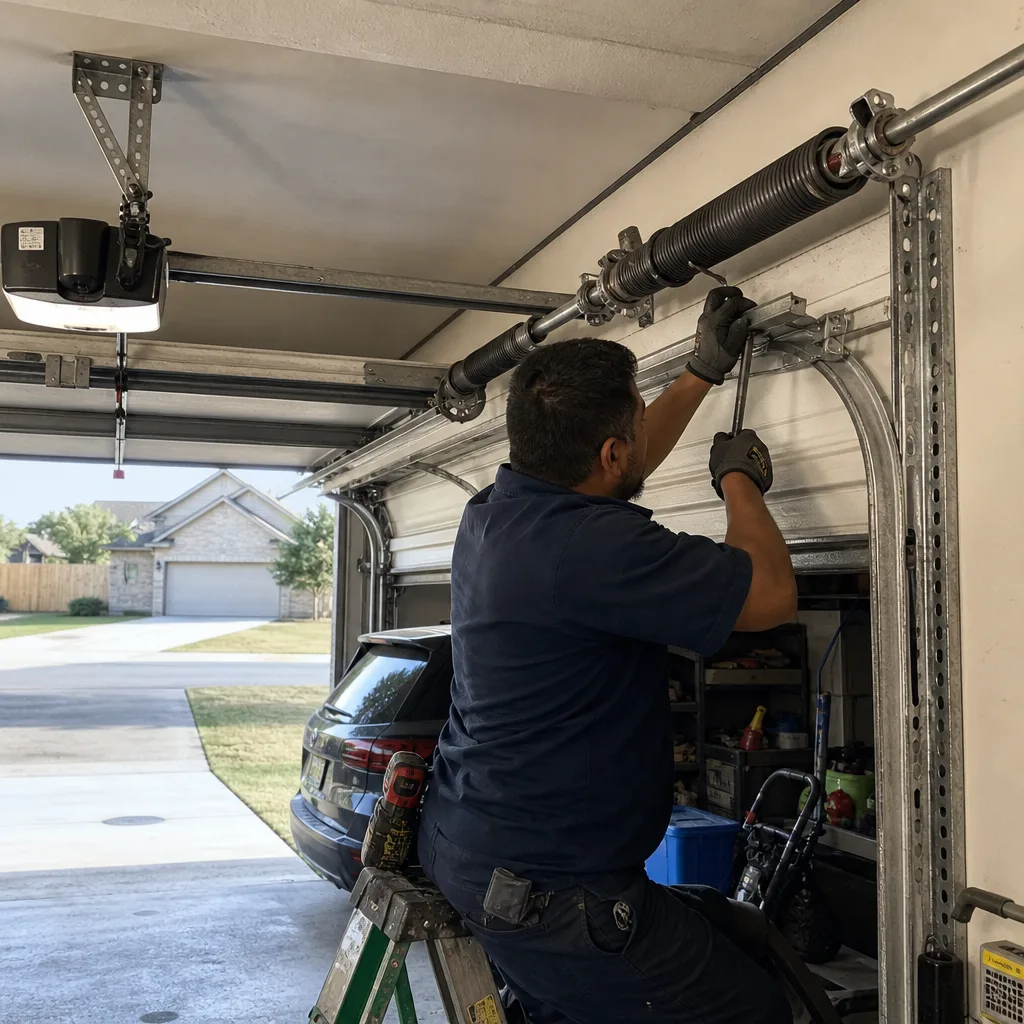
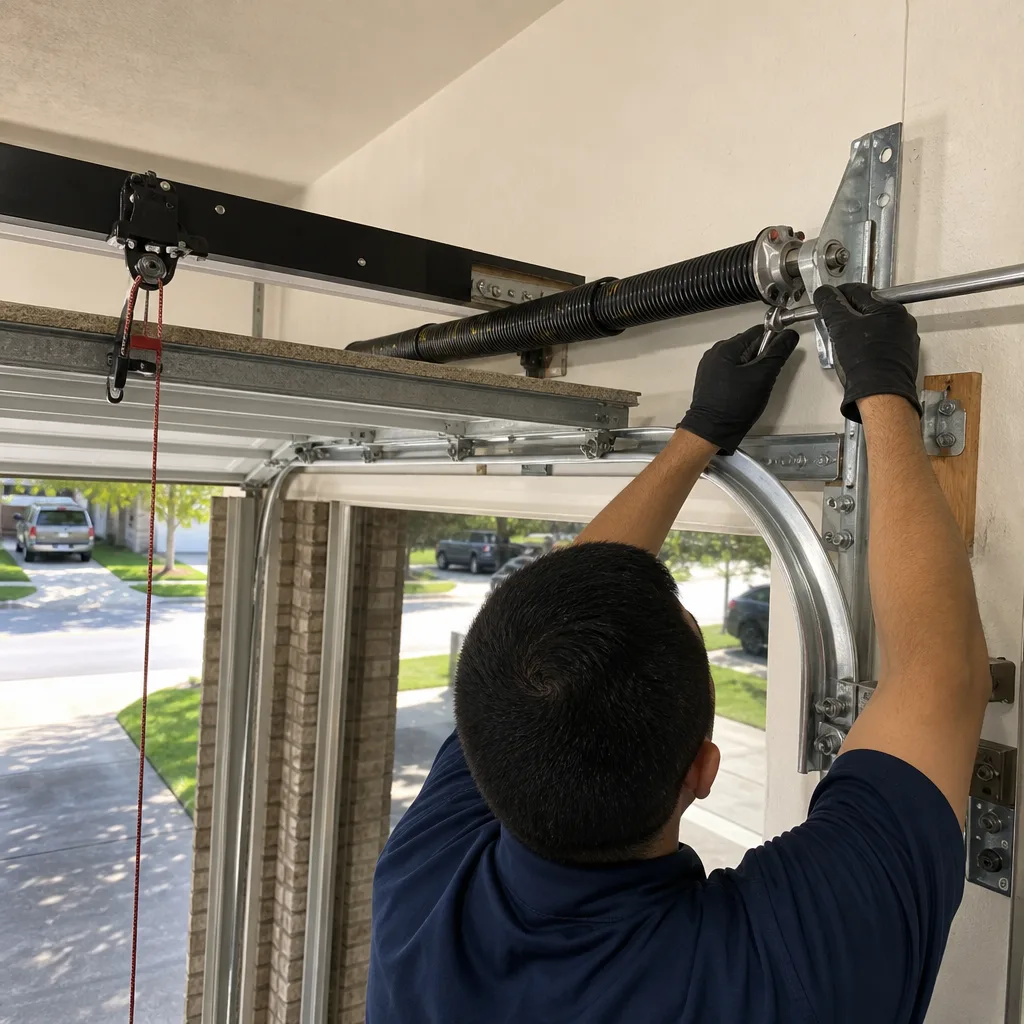
Call a professional when the symptom involves anything under spring tension, anything involving cables, or any door that will not open or close. If you’re unsure how to choose one, see our How to Hire a Garage Door Contractor in Dallas: A Step-by-Step Guide. Springs and cables carry enough force to seriously injure or kill, and they are not DIY items. A technician will also catch secondary issues you can’t see: a cracked hinge buried under a panel, a spring that’s within 500 cycles of failure, a track that’s shifted out of plane by a fraction of an inch.
In our experience, the homeowners who call the earliest pay the least. The guy who calls about a rattle spends $125. The guy who lets the rattle become a grind and then a bang spends $500. Brock Garage Doors Dallas offers free estimates in Dallas with written pricing before any work starts. Call (254) 269-5837 and describe the symptom using the four-part format above. A live person answers.
Frequently Asked Questions
Most grinding noise repairs in Dallas run $90 to $180 for a roller replacement, and $150 to $400 if the track has been damaged and needs realignment or replacement. The spread depends on how long the grinding has been happening and whether the track is salvageable. A grinding door that gets fixed early is usually a single-roller job. A grinding door that’s been run for a month often needs track work too. Call (254) 269-5837 for an exact quote. Estimates are free.
Yes. Snapped spring service is same-day with a live person answering calls 24/7, including weekends and holidays. A snapped spring is a failure, not a warning, and it leaves your garage unusable and unsecured. Call (254) 269-5837 and tell the dispatcher you heard a bang and the door will not lift. The truck will be stocked for spring replacement when it arrives.
No, not at Brock Garage Doors Dallas. The price is written and handed to you before any work begins, and the number on the invoice matches the number you approved. If the technician finds additional issues during the repair, they stop and get your approval before touching anything else. There is no door-price adjustment and no surprise add-ons.
Yes, when the symptom is described accurately on the phone. Rollers, springs, cables, hinges, and sensor parts for Chamberlain, Genie, Clopay, and Amarr doors are typically on the truck. The more specific you are about the sound and behavior, the better stocked the truck will be for your exact failure. This is the whole point of the four-part description format in this guide.
Once a year at minimum. Dallas climate conditions, including summer heat above 100°F, spring hail, and expansive clay soil, accelerate wear on springs, rollers, and track alignment relative to cooler or more stable-soil regions. A door that cycles three to four times per day in a Dallas household wears through its rated spring cycle count roughly twice as fast as a door in a two-cycle-per-day household.
That pattern is almost always sensor bracket movement from thermal expansion. The Dallas summer heat can shift a sensor bracket enough to misalign the infrared beam, causing the door to reverse as if something is in the way. It’s an adjustment job, not a sensor replacement. A technician will re-aim the sensors and often replace the bracket with one that holds alignment through the temperature range. Call Garage Door Opener Repair in Dallas for a same-week visit if this pattern matches yours.
Yes. A cable under tension that fails can allow the door to drop suddenly, especially if the door is in the open or partially open position. This is a serious safety risk and the reason cable slack or fraying should never wait. If you see a loose or frayed cable, do not open or close the door manually and do not stand under it. Call Garage Door Cable Repair in Dallas and describe which side the cable is on and whether the door is stuck open or closed.
The Bottom Line
Garage doors telegraph their failures. A rattle that started last spring becomes a broken hinge by fall. A squeal that got ignored becomes a scored track. A door that was slow for six months becomes a snapped spring on a Sunday morning with the car inside the garage. The warning signs are consistent and readable once you know the language: sounds by location and timing, visuals by cable and gap, behavior by speed and balance. What separates the homeowners who spend $125 and one service visit from the ones who spend $500 and two visits is how early they call. In Dallas, where the garage door is the front door for most households, an ignored warning sign is a compounded problem. If you hear something new, run the two tests in this guide and call with a description that tells the dispatcher exactly what’s happening, or explore more guides & resources for additional maintenance tips. You’ll get the right technician, the right parts, and a repair that holds.
Written by Wade Mercer, Owner at Brock Garage Doors Dallas, serving Dallas since 2001.
See the difference
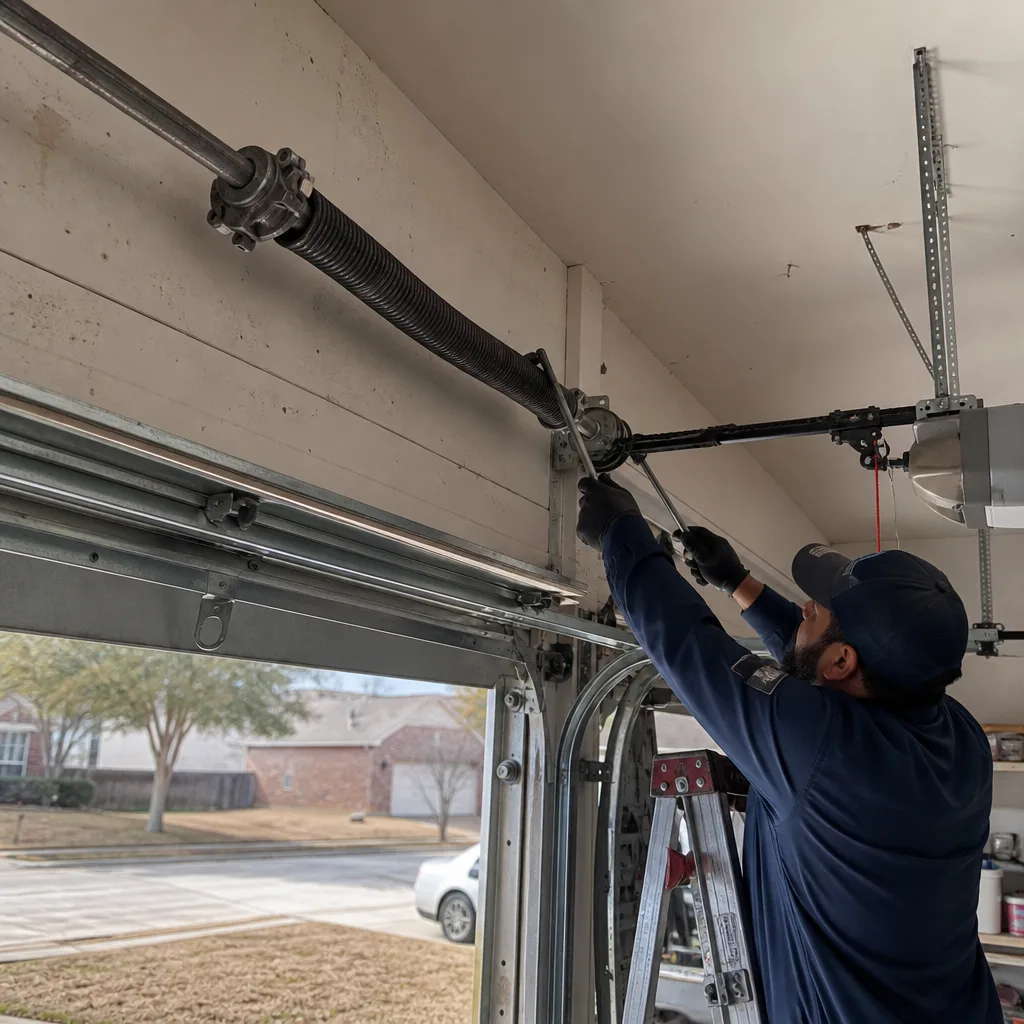 Before
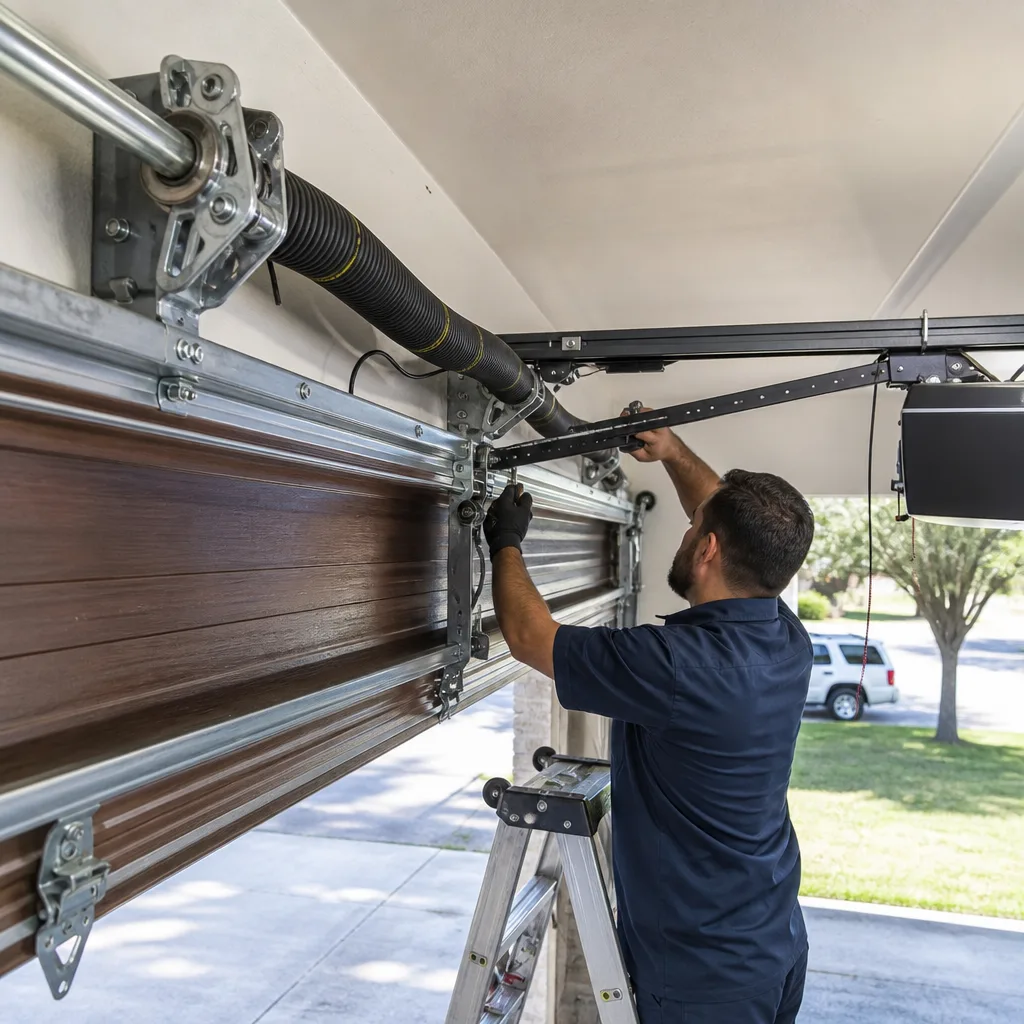 After
After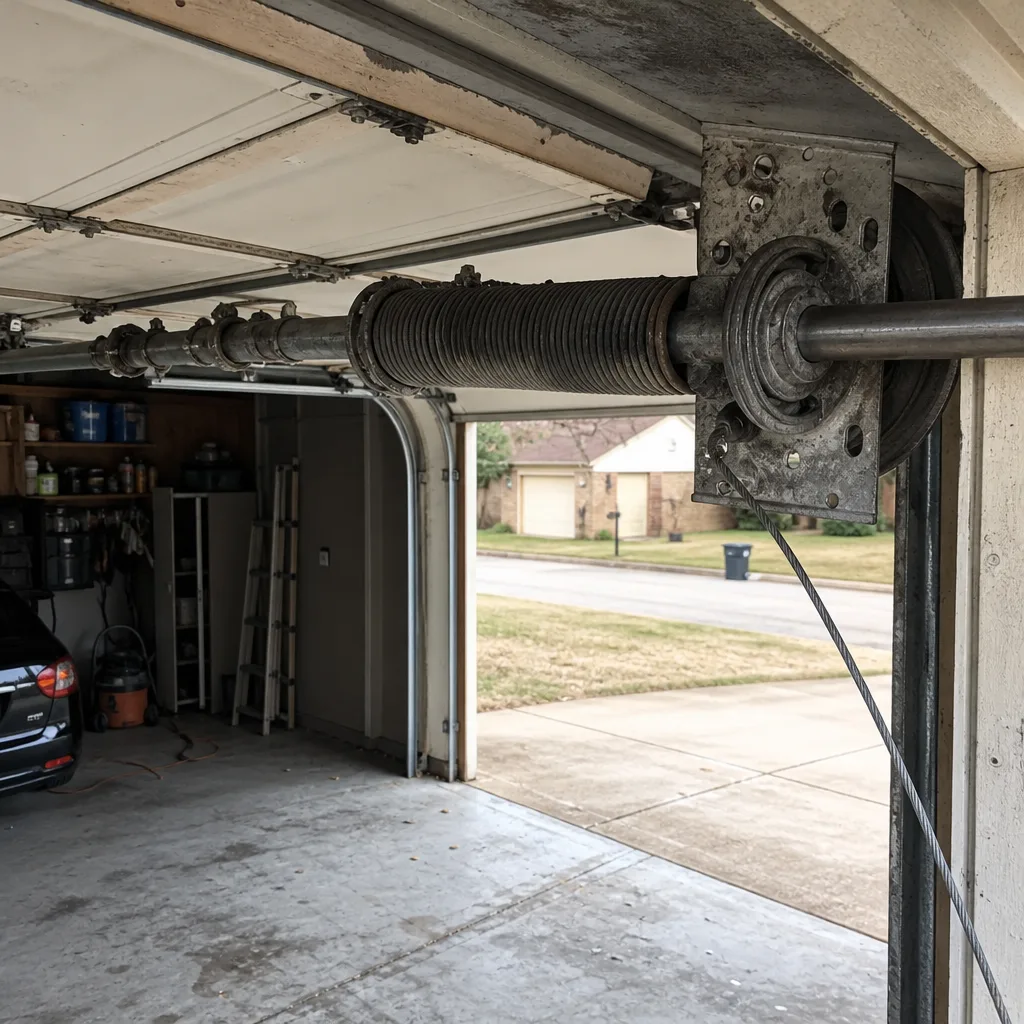 Before
 After
After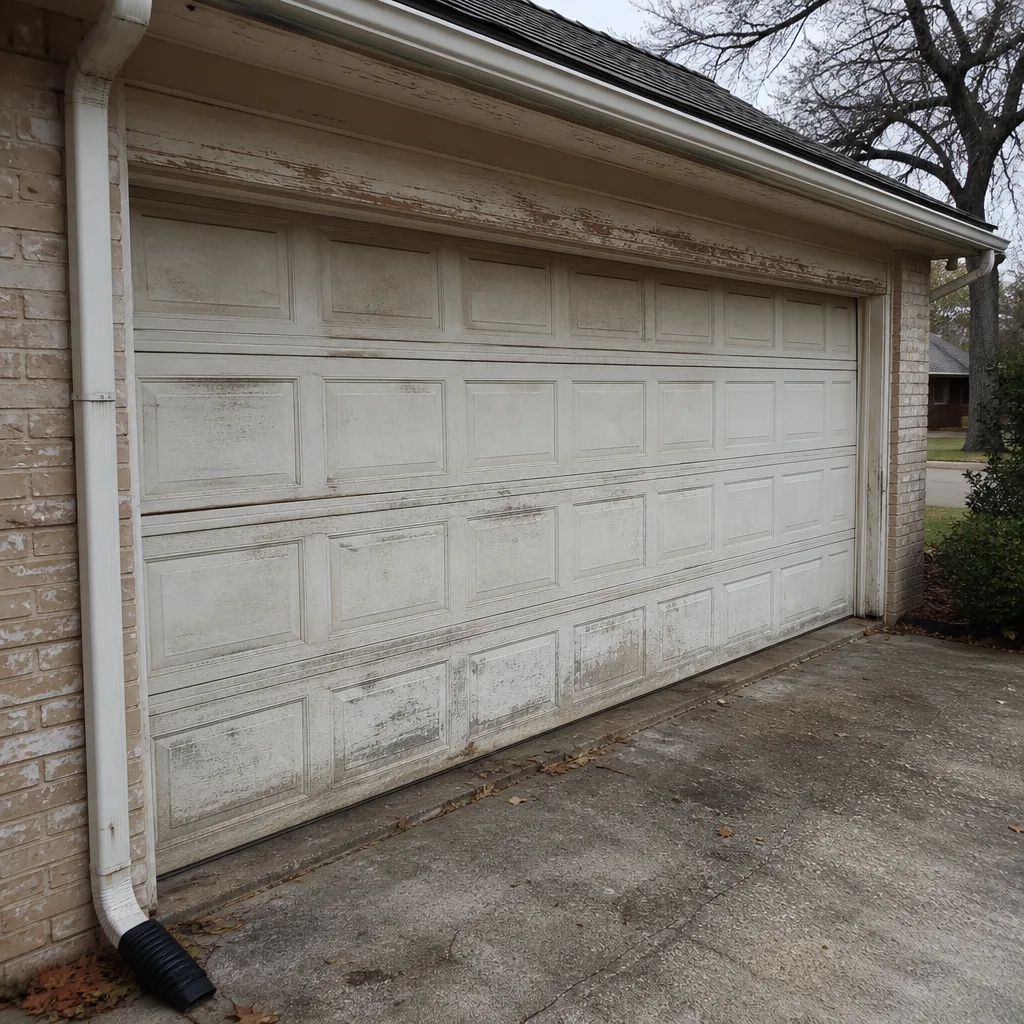 Before
 After
After