
Last updated October 16, 2026
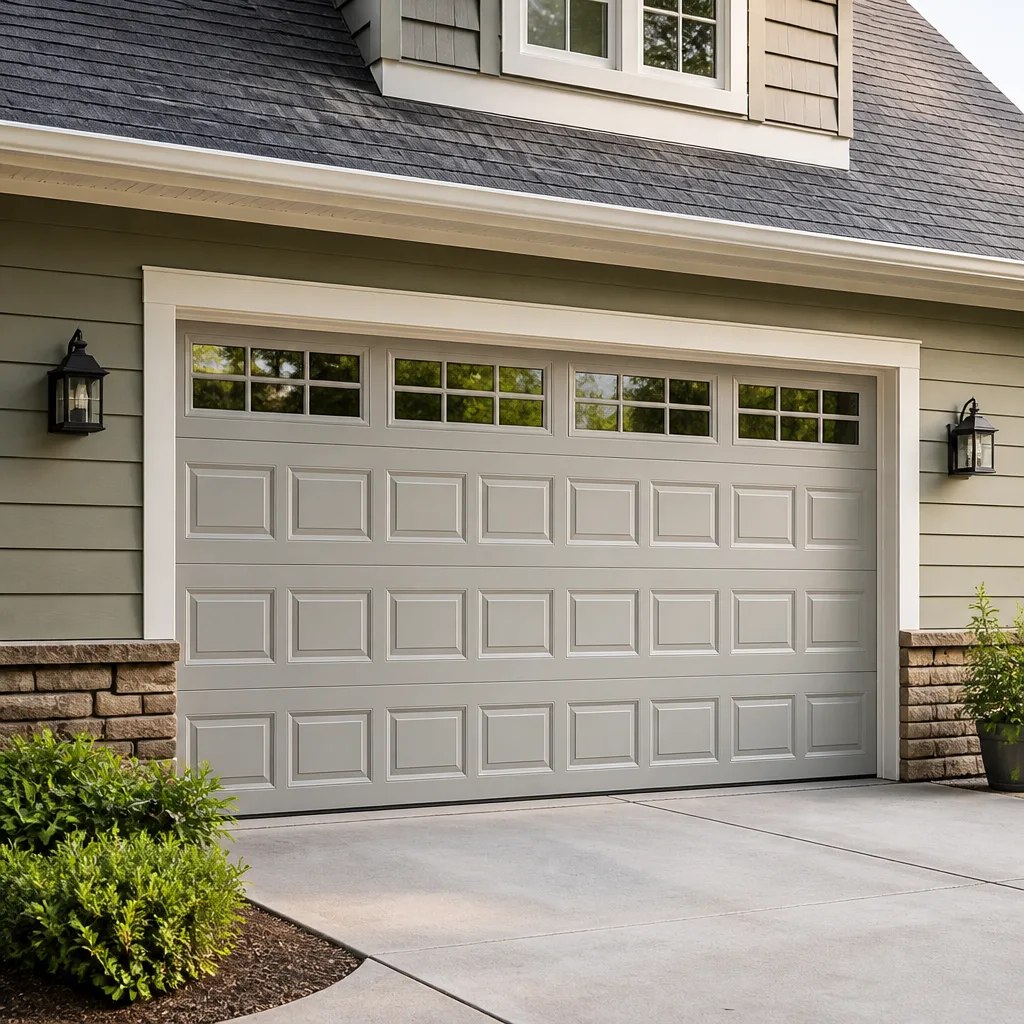 Raised-panel steel
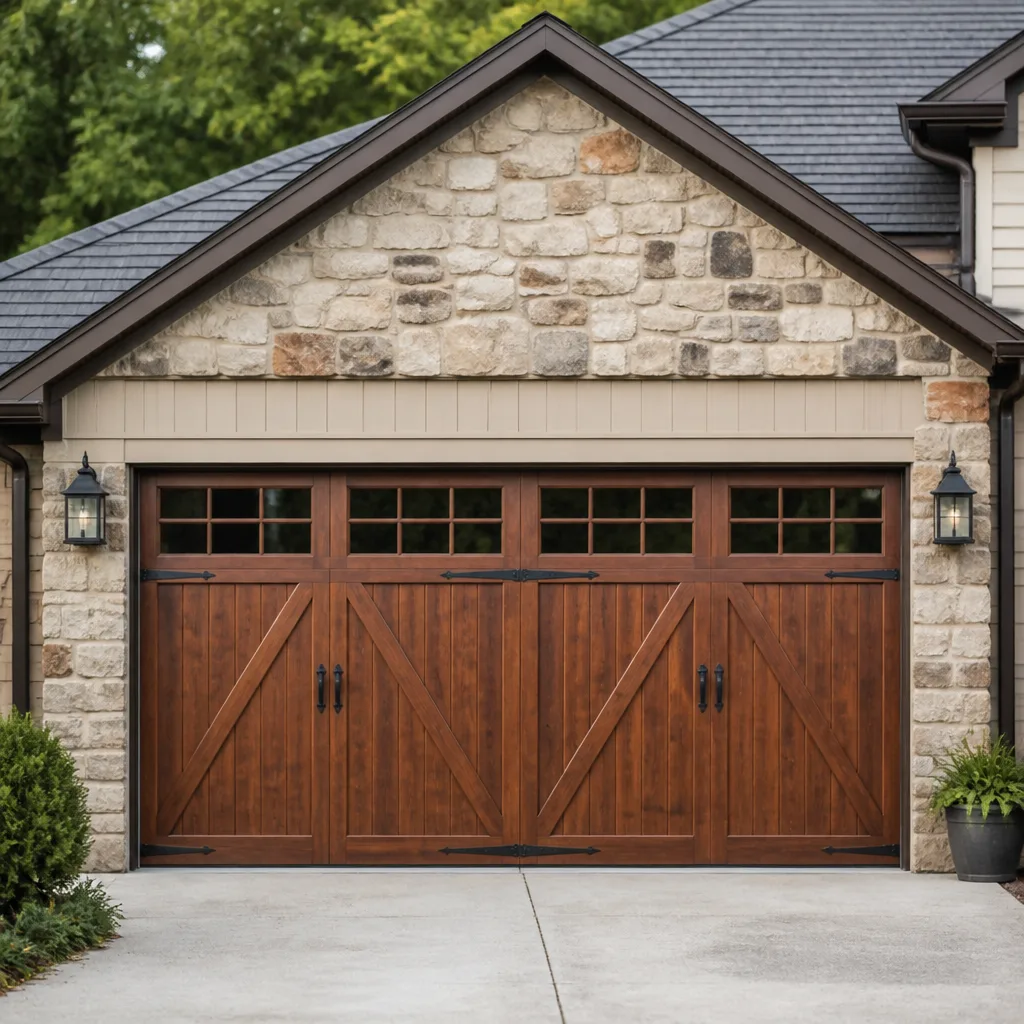 Carriage house
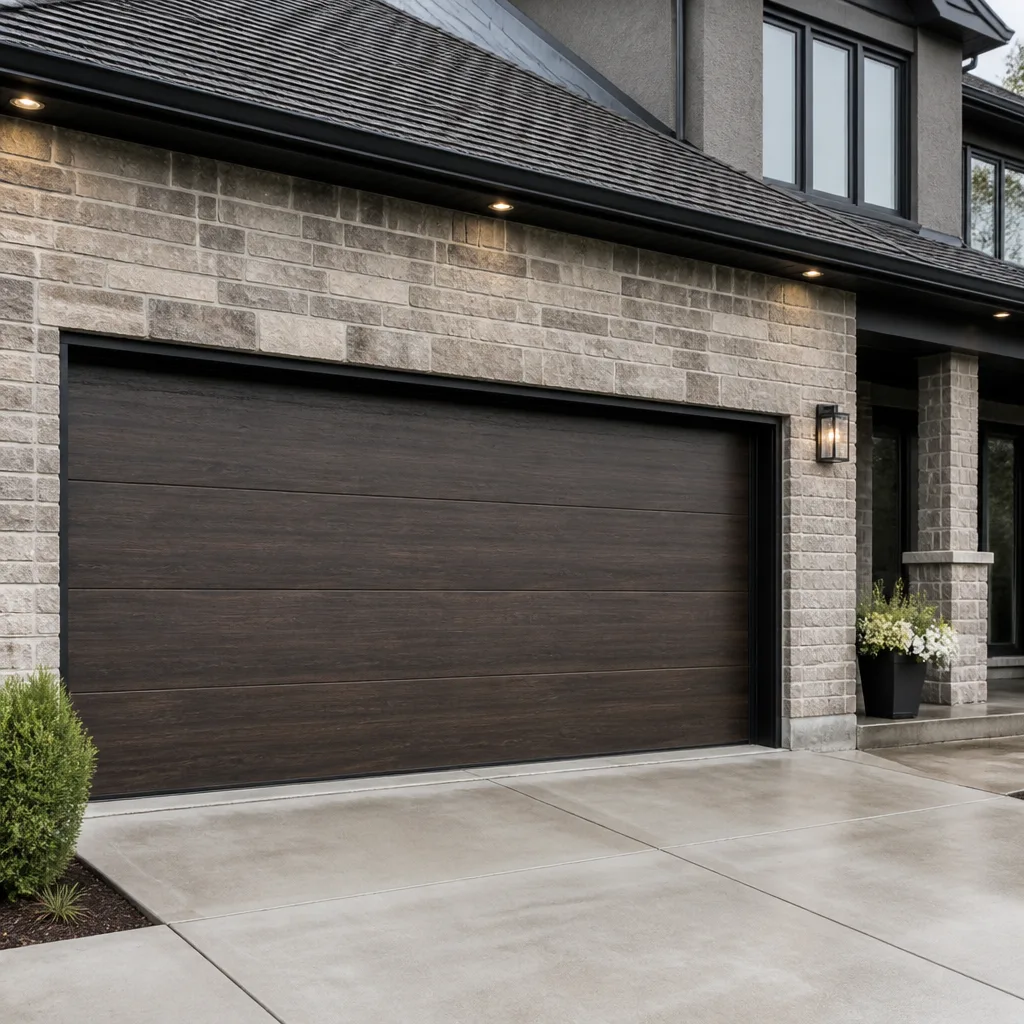 Modern flush
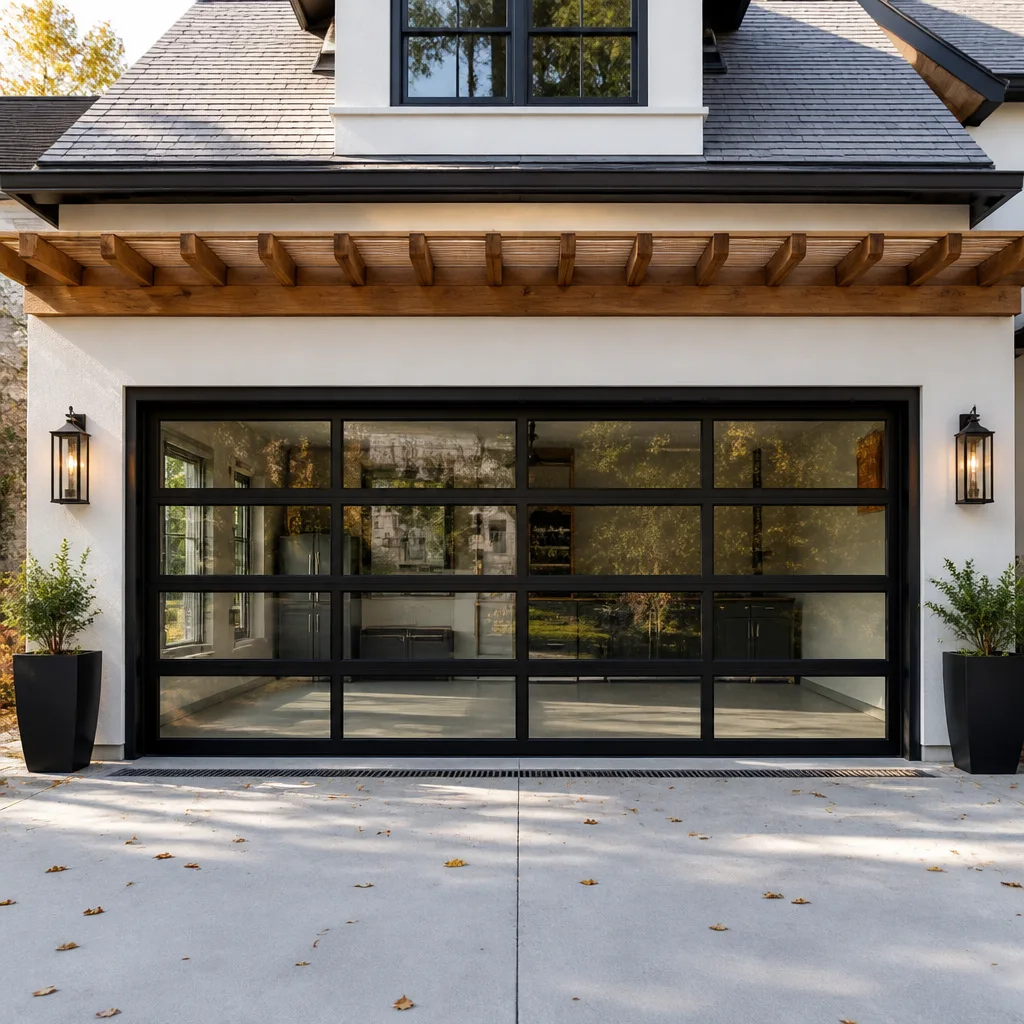 Full-view glass
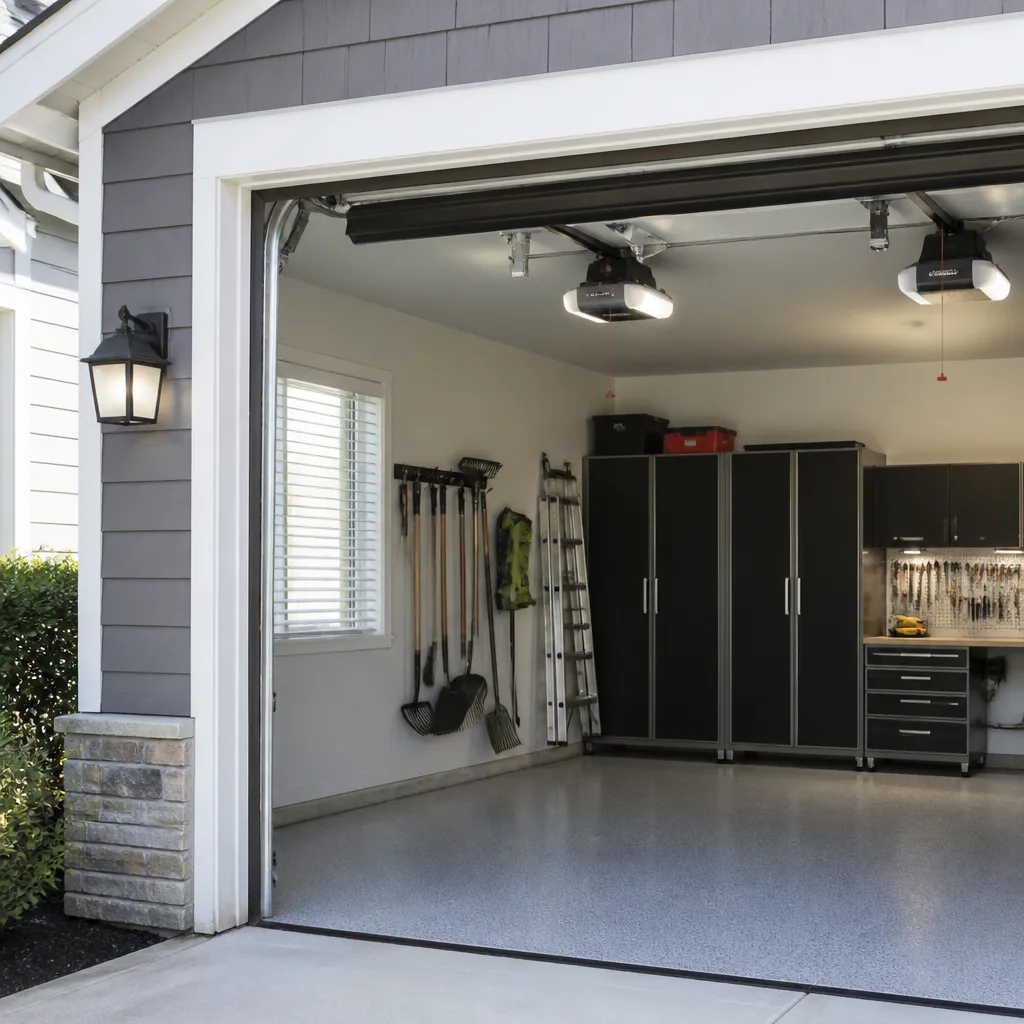 LiftMaster openers
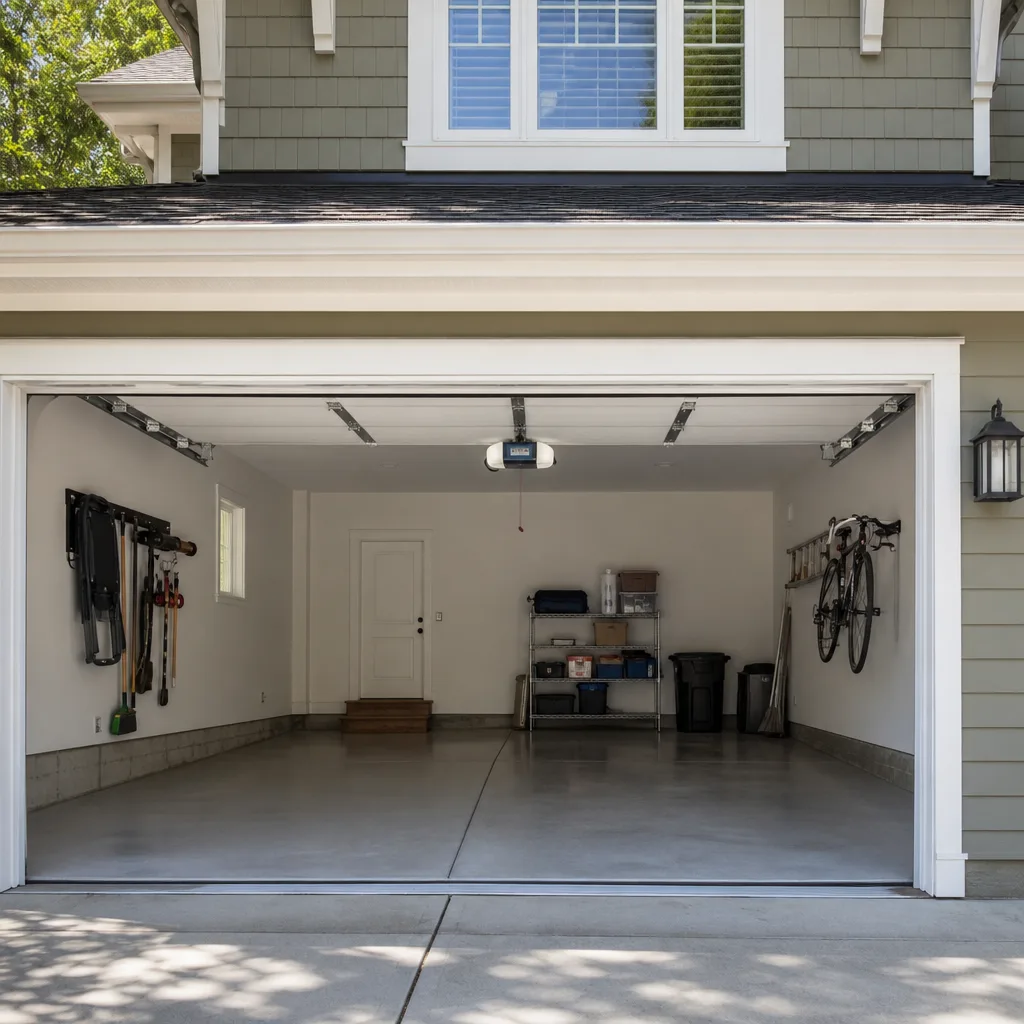 Chamberlain openers
Full 25-point door and opener safety check with every visit - springs, cables, rollers, tracks, and your LiftMaster or Chamberlain opener included
You get a price before we start. It does not change when the truck arrives.
Get your free estimateThe Complete Guide to Garage Door in Dallas
The average Dallas garage door is opened and closed more than 1,500 times a year, yet most homeowners couldn’t name a single component on it until something breaks at 7 a.m. on a workday. You don’t need to become a door mechanic, but you do need to understand how the system works, because the five or six parts that fail most often are all connected. This guide covers what makes Dallas garage doors fail differently than doors in other climates, of course. But it also gives you the one thing most guides skip: the questions to ask before anyone touches your door, and the numbers that tell you whether a quote is fair. For more, see our Garage Door Cost Breakdown: The Dallas Homeowner’s Reference for 2026.
Quick Answer
A garage door is a system of interdependent parts: springs counterbalance the weight, cables transfer that force to the door, tracks guide it, the opener provides motion, and weatherstripping protects everything from Dallas heat and humidity. Most repairs in Dallas fall between $150 and $400 for a single component fix, with full spring replacement running $250 to $500 and a new opener installed at $400 to $800. See our DIY vs Professional Garage Door: The Dallas Homeowner’s Decision Guide to decide when to call in help. Before hiring anyone, get a written quote and confirm whether it includes a parts-and-labor guarantee of at least 90 days, preferably a full year.
Styles & brands we work with
Table of Contents
- How Your Garage Door Actually Works
- Dallas-Specific Conditions That Change How Doors Fail
- Component Interdependency: Why You Can’t Fix Just One Thing
- How to Read Your Garage Door’s Serial Plate
- Sectional vs. Tilt-Up vs. Roll-Up: What You Own and What It Costs to Fix
- What a Full System Inspection Should Cover
- Common Mistakes to Avoid
- When to Call a Professional
How Your Garage Door Actually Works
Here’s the plain-English version. Your door weighs between 130 and 400 pounds depending on size and material. The springs carry most of that weight, not the opener. The opener is essentially a trigger mechanism: it tells the system to move, and the springs provide the actual lifting force. When a spring breaks, the opener will sometimes still run, but the door won’t lift, because all that weight is suddenly back on the motor. That’s the moment most people call us, and the moment they learn what they actually own.
A standard sectional system, which is what most Dallas homes have, includes these parts, and they all work together:
- Torsion springs: The thick coiled springs mounted on a shaft above the door. They store the energy that lifts the door. Most residential springs are rated for 10,000 cycles, which in Dallas usually means about 7 years at 1,500 cycles per year, less at 2,000 or more.
- Extension springs: Stretch-type springs along the horizontal tracks, found on older doors and lighter setups. These are more common on detached garages and homes built before about 1990 in Dallas.
- Cables: Steel cables that run from the bottom brackets, around the drums, and up to the shaft. They transfer spring energy to the door. When a cable snaps, the door often hangs crooked or slams to one side.
- Tracks and rollers: Steel rails on both sides, with nylon or steel wheels that ride inside them. Track alignment determines whether the door moves smoothly or binds and jerks.
- Opener: A motor unit on the ceiling with a belt, chain, or screw drive. It pulls or pushes the door along the track system. The opener works much harder when springs are weak, which shortens its life.
- Weatherproofing: Bottom seals, side seals, and insulation panels. In Dallas, these parts fail from heat exposure and UV, and they affect both energy bills and door performance.
Every garage door repair in Dallas, at least the kind that lasts, starts with understanding which of these components has failed and what else it may have damaged on the way down.
Dallas-Specific Conditions That Change How Doors Fail
National average failure rates don’t mean much here. Dallas has hot summers, and the heat does three things to a garage door system that you won’t read about in a general repair guide.
Heat-warped tracks. Garage temperatures in Dallas can exceed 120 degrees in July and August. Steel tracks expand in heat, and over several summers, sections can bow slightly out of alignment. A track that’s off by a quarter inch is enough to make rollers bind and wear unevenly. We see doors in Preston Hollow and Lake Highlands that get stuck halfway up in summer afternoons, which is almost always a heat-warped upper track section.
High-humidity cable corrosion. Dallas humidity runs high from spring through fall, especially east of the city where you get more moisture off the Gulf. Cables take the brunt of it. Surface rust is normal, but deep pitting weakens the wire strands. A cable that looks fine at a glance can snap under load. In our experience, Dallas cable failures cluster in June and September, after humidity peaks have had time to work on the steel.
Hail-dented panels. North Texas gets hail, and garage doors are the largest exposed vertical surface on most homes. A dented panel doesn’t just look bad; it can throw off the door’s weight distribution and stress rollers, hinges, and tracks. After a big hail year, we see a spike in roller and hinge failures on doors that never had those problems before the storm.
UV breakdown of weatherstripping. Intense sun eats rubber and vinyl seals faster in Dallas than in most of the country. Bottom seals crack and split within three to five years here. When they do, you get dust, leaves, and small critters in the garage, plus heat transfer that makes a bad situation worse.
The practical takeaway: a Dallas door needs a seasonal look-over. You don’t need to call a professional for that; you can do a visual check in ten minutes. But you do need to know that “national average” failure rates don’t apply to a door that’s been baking in a Dallas garage since 2015.
Component Interdependency: Why You Can’t Fix Just One Thing
Here’s the failure pattern we see most often in Dallas, and it’s one that separates a lasting repair from a temporary patch. A torsion spring snaps. A company comes out, replaces the spring, and leaves. Three weeks later, the cable snaps. Then the bottom bracket gives. The homeowner thinks they’ve had a run of bad luck. What actually happened is that the first repair was incomplete.
The system works like this:
- Springs set the tension. When one spring breaks, the other spring, if there is one, suddenly carries double the load. It weakens quickly. That’s why we recommend replacing both springs when one fails, even though only one is broken.
- Springs determine cable load. When springs are old or incorrectly tensioned, the cables don’t wind onto the drums evenly. That causes one cable to go slack while the other bears the full load of the door. The slack one rubs against the drum and frays. The tight one stretches. Both are now on borrowed time.
- Cable condition affects the drums. A frayed cable doesn’t sit cleanly in the drum groove. It binds, which puts lateral pressure on the drum and the shaft. Over weeks, this wears the drum bearing and can even bend the shaft slightly.
- Drum and bearing wear affects track alignment. A worn bearing lets the shaft shift. The drums no longer pull evenly. One side of the door rises faster than the other. The door starts binding against one track, which wears the rollers on that side.
- Roller wear increases opener load. Now the opener is pulling harder to move the same door. Motors are rated in cycles and load. Overloading doesn’t kill an opener overnight, but it cuts its life dramatically. A properly balanced door can let an opener last 12 to 15 years. A door that’s binding can burn one out in 5.
This is why, when we inspect a broken spring in Dallas, we check the cables, drums, end-bearing plates, tracks, and rollers before we quote a price. That’s not upselling. It’s the difference between fixing the line item and fixing the system. And it’s why a garage door cable repair in Dallas that ignores the spring tension that caused it will come back as another cable failure within months.
How to Read Your Garage Door’s Serial Plate
Every manufactured garage door has an identification label, usually a sticker or metal plate on the inside of the door, near the bottom section or on the left edge of the top section. It tells you more than most people realize. Here’s how we read one on a job.
First, the manufacturer name and model number. This tells us whether parts are still in supply. Garage door models get discontinued regularly. If parts are no longer in the supply chain, you’re looking at replacement rather than repair for certain components. Knowing this before a contractor shows up saves time.
Second, the size and weight class. Doors are listed as width x height in feet, like 16×7 or 9×7. The weight rating tells you what springs the system needs. A common error is replacing springs with the wrong wire size or length for the door’s weight, which makes the door either heavy to lift or dangerously oversprung.
Third, the R-value if it’s an insulated door. Dallas doors with insulation typically run R-6 to R-18, with higher numbers meaning better thermal resistance. This matters if your garage is attached to the house or you use it as a workspace. An uninsulated door on a west-facing Dallas garage can push interior temperatures up noticeably in summer.
Fourth, the cycle-life rating, which some manufacturers now print on the label. A standard spring might be rated 10,000 cycles. A high-cycle spring might be rated 25,000 or more. Given how often the average Dallas door cycles, a high-cycle spring can add years to the system. It costs $80 to $150 more at replacement time, and for most homeowners, it’s the right call.
If you can’t find the label, check behind the door’s top section or on the track frame. If it’s gone, a photo of the door plus a measurement of Height, Width, and Spring wire diameter is usually enough for an experienced technician to identify the system. We do this on every first visit.
Sectional vs. Tilt-Up vs. Roll-Up: What You Own and What It Costs to Fix
Most Dallas garages have sectional doors, which are panels hinged together that roll up on a track. They’re the standard for attached garages on post-1980 homes. A tilt-up is one solid panel that tilts out and then slides up into the garage, more common on pre-1970 homes in older Dallas neighborhoods like East Dallas and Oak Cliff. A roll-up is the commercial-style door made of narrow slats that coil into a barrel above the opening, sometimes used for detached shops or unusually tall openings.
Here’s how the differences matter for repair costs and contractor availability in the Dallas metro.
| Door Type | Typical Repair Costs in Dallas | Contractor Availability | Common Issues in Dallas Climate |
|---|---|---|---|
| Sectional with torsion springs | $150 – $500 per repair; spring replacement $250 – $500 | High – every major company works on these | Spring failure from cycle wear, heat-warped tracks, hail-dented panels |
| Tilt-Up (one-piece) | $200 – $600; sometimes more for parts | Moderate – fewer techs work on them daily | Pivot hardware wear, rust on side hinges, cracked panels from hail |
| Roll-Up (steel slat) | $200 – $800; barrel and motor work runs higher | Low – commercial specialists, not every residential company | High-friction wear in heat, barrel bearing failure, motor burnout |
A sectional door with a broken torsion spring in Far North Dallas should be a same-day or next-day fix with most companies. A tilt-up with a cracked panel may take days to source, because one-piece doors are less common and parts aren’t stocked broadly. A roll-up with a barrel bearing issue may need a commercial-focused technician, and in the Dallas metro, that often means a longer wait or a higher dispatch fee. Knowing your door type before you call lets you screen contractors accurately and avoid wasted visits.
We work on all three, and we’re trained across LiftMaster, Chamberlain, Genie, Clopay, Amarr, Wayne Dalton, Craftsman, and Raynor systems, which covers almost every door you’ll find in Dallas. When a system uses a Craftsman opener paired with a Wayne Dalton door, as many 1990s-era Dallas homes do, the parts compatibility questions matter. The fix has to account for both sides.
What a Full System Inspection Should Cover
Most “free estimate” visits in this industry are not inspections. They’re a quick look at the broken part, a number on a tablet, and a signature line. A real system inspection looks at the whole door the way a doctor looks at the whole patient. Here’s what we check, in order, on every Dallas visit.
- Spring condition and cycle rating. Wire size, length, installed date if known, and visible wear. We test the balance by disconnecting the opener and lifting the door manually at half-height. A door that stays put is balanced. One that drops or rises has a spring problem.
- Cable integrity and drum alignment. Cable strands should be smooth, not frayed. Drums should wind evenly with no overlap or gap. This check catches failures before they send the door crashing.
- Track alignment and roller wear. We run a level on both vertical tracks and both horizontal tracks. A misaligned section is adjusted before it becomes a binding problem. Rollers get checked for flat spots, worn bearings, and cracked nylon.
- Hinge and bracket tightness. Every hinge should sit flush on the panel with no play. A loose bottom bracket is a safety hazard, because that’s where cable tension anchors. On Dallas doors, heat cycling loosens hardware faster than in cooler climates.
- Opener force and travel settings. The opener should reverse with light pressure, and travel limits should match the door’s physical stop points. A misadjusted opener that doesn’t reverse properly is a safety issue, especially with children or pets in the home.
- Weatherstripping and panel condition. Bottom seal, side seals, and top brush. Hail damage to panels gets noted even when it’s cosmetic, because it can become structural later.
- Safety sensor alignment. The photo-eye sensors near the floor must be aligned and unobstructed. A surprising number of “broken openers” in Dallas are just sensors that got bumped out of line.
That’s the standard we work to on every visit. The Garrison Code, as we call it internally, means a price that’s written before the work starts, a clean job site when we leave, and a repair that’s covered in writing for 365 days. If a covered repair fails in that window, we come back and fix it at no charge. That’s not a verbal assurance. It’s on the page.
How Much Does Garage Door Repair Cost in Dallas?
Here are the real numbers for the Dallas market, based on what we quote and what we see from other reputable companies. These are ranges, not promises, and your exact price depends on your door type, spring size, and what’s worn alongside the obvious problem.
- Spring replacement (both springs): $250 – $500, including labor. Single-spring doors run lower. High-cycle springs run $80 – $150 more, and are worth it for a door that cycles 1,500+ times a year.
- Cable repair or replacement: $150 – $275 per cable. If both cables and the drums need work, expect $300 – $450.
- Roller replacement (full set): $120 – $200, including nylon rollers.
- Track realignment or section replacement: $150 – $300 for realignment, $300 – $700 for track section replacement.
- Opener installation: $400 – $800, depending on drive type and horsepower. Belt drives run at the high end and are quieter, which matters for attached garages.
- Weatherstripping replacement: $90 – $180 for bottom and side seals.
- Panel replacement from hail or collision damage: $300 – $600 per panel, depending on door model and insulation.
Every price we quote in Dallas is written before work begins. The number you approve is the number on the invoice. No one should be quoting a garage door repair from the cab of a truck without looking at the system. If a company won’t put a price in writing, don’t let them turn a bolt.
See the difference
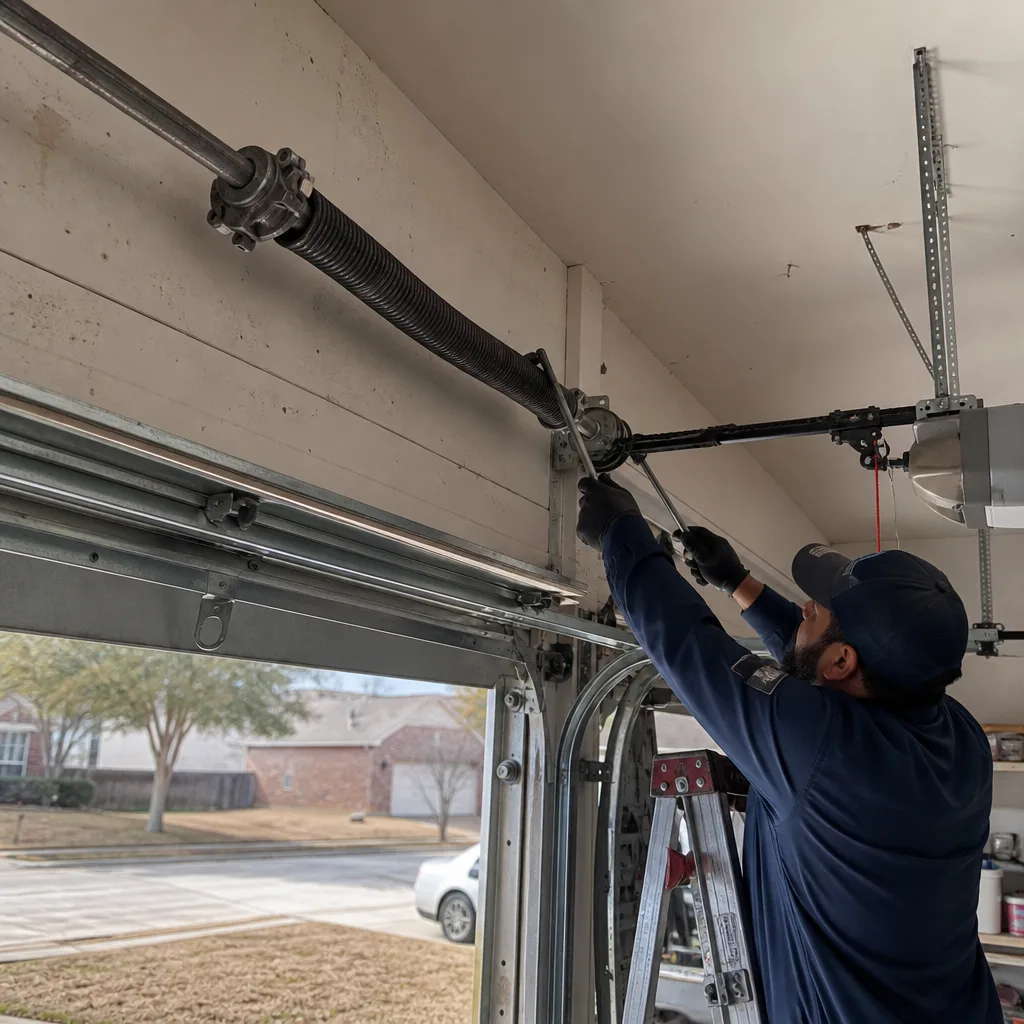 Before
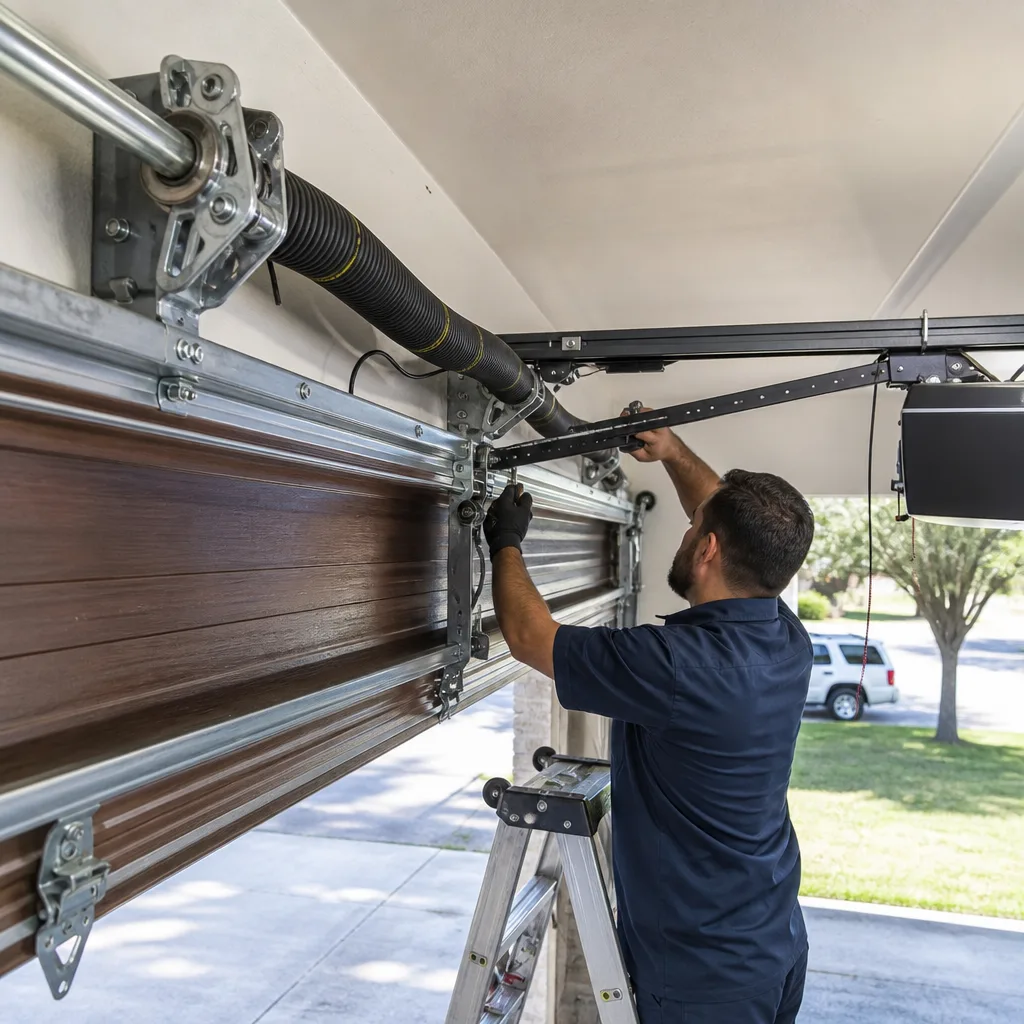 After
After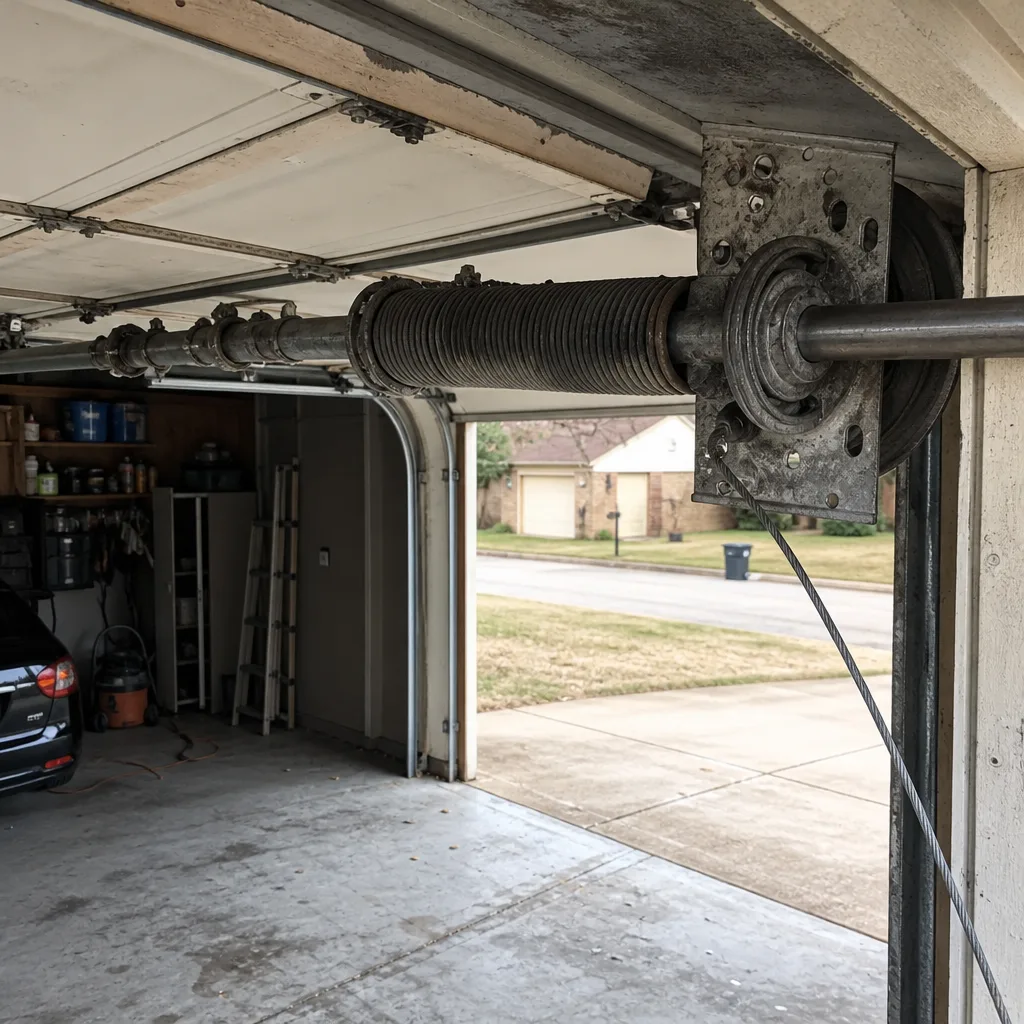 Before
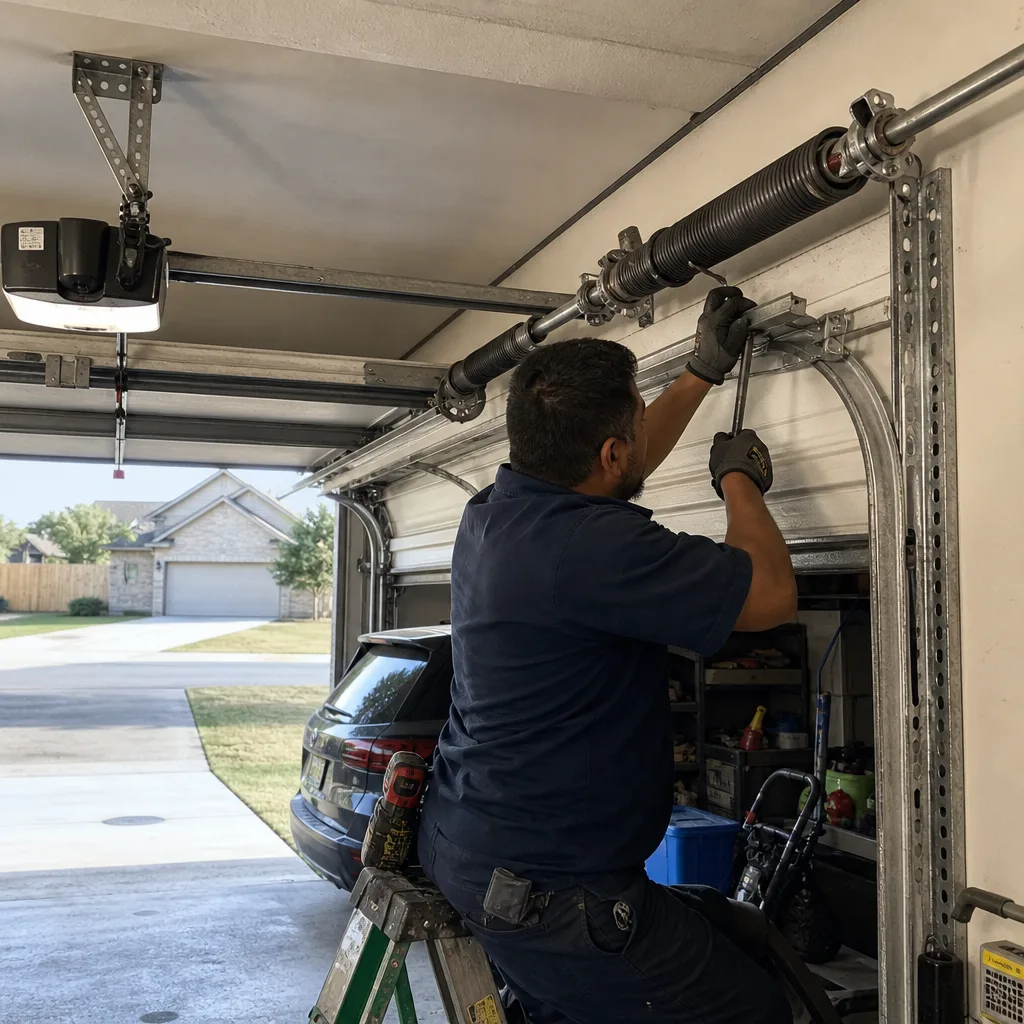 After
After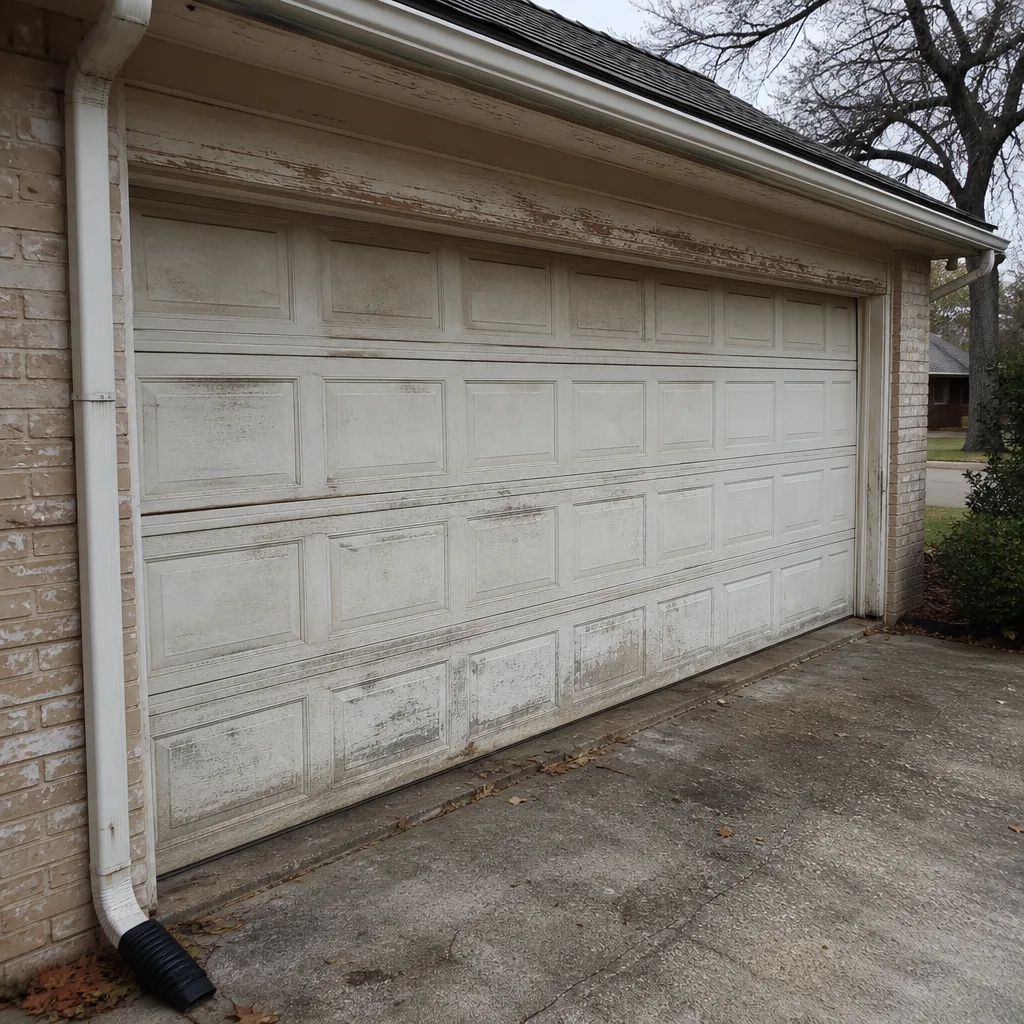 Before
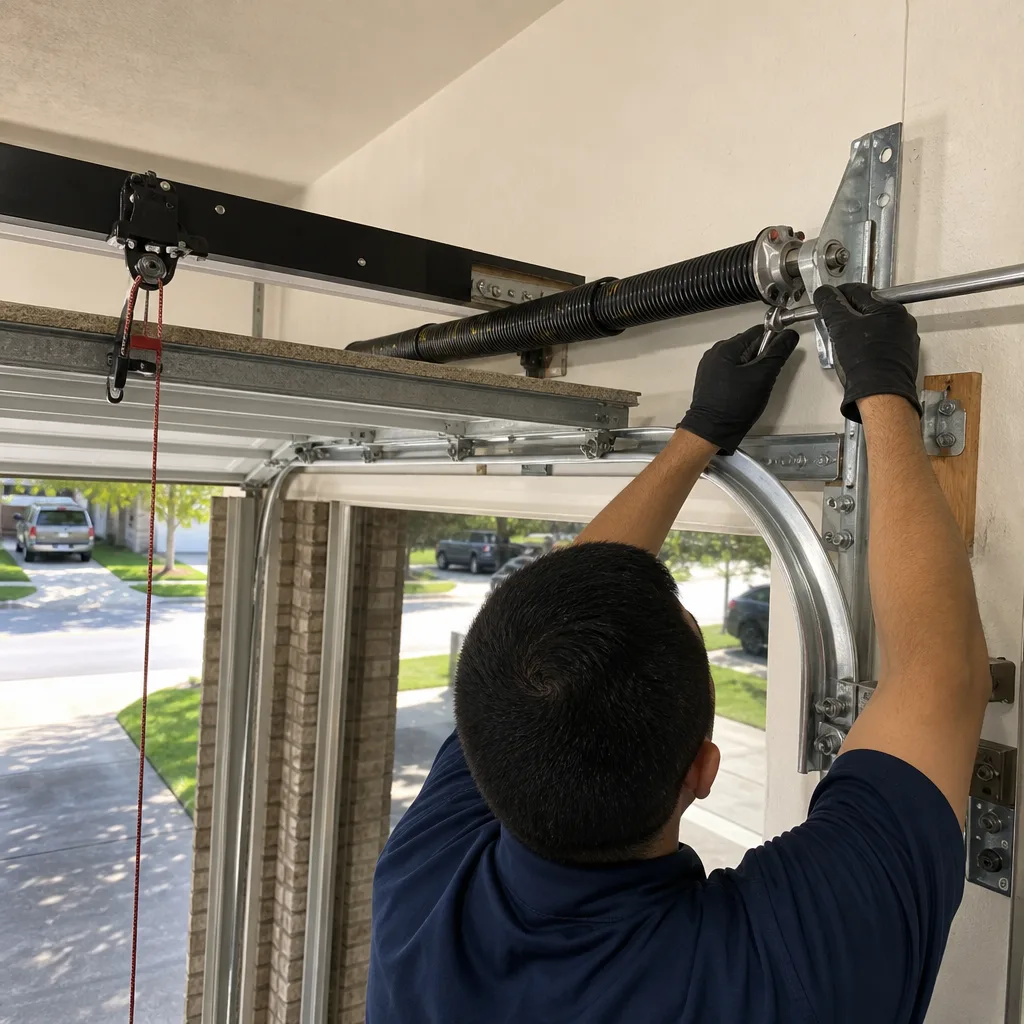 After
AfterWhat to Check Before You Call
You can save yourself a service call, or at least a surprise, by doing these three checks before you pick up the phone:
- Look at the springs. A snapped torsion spring often leaves a visible gap in the coil. If one spring is broken, tell the company on the phone. That tells them what parts to bring.
- Check the door balance manually. Pull the red emergency release handle while the door is closed, then lift the door to half height. If it stays, the springs are doing their job. If it drops or shoots up, you have a spring or cable problem.
- Note any unusual noises. A grinding sound usually means a roller or hinge. A loud bang is almost always a spring. A clicking opener that won’t move is often a stripped gear.
Those details help the dispatcher match the right technician to your job, and they help the tech arrive with the right parts on the truck. For garage door opener repair in Dallas, knowing the brand and the symptom is half the diagnosis.
Your Garage Door and Your Home’s Security
A garage door that’s half-functional is an invitation. The garage is the largest opening on most Dallas homes, and a door that doesn’t close all the way, or an opener that won’t engage, changes the security math immediately. We don’t say this to scare anyone. We say it because a door that’s been left open overnight in a Dallas neighborhood is the thing a homeowner remembers at 3 a.m. and can’t fall back asleep over.
The security-relevant components are simpler than most people think:
- The emergency release: The red cord hanging from the opener rail. When it’s pulled, the door disconnects from the opener and can be lifted by hand. Thieves know how to fish this cord through a gap at the top of the door. A zip tie or a shield can stop that, and it takes two minutes.
- The auto-reverse system: Not just a safety feature. It also affects security, because a door that reverses when it hits debris or uneven ground doesn’t seal. A door that doesn’t close fully is an open invitation.
- The locking mechanism, if you have one: Many Dallas garages have a manual slide lock. If it’s engaged and you run the opener, you’ll damage the door, the opener, or both. Check it before you hit the button.
A working garage door is part of your home’s perimeter. Treat it that way.
Common Mistakes to Avoid
- Replacing one spring instead of both. The remaining spring has already been stressed by carrying the full load. It will fail soon, and you’ll pay for a second service call. Replace both, and if your door cycles heavily, upgrade to high-cycle springs.
- Ignoring a slow or noisy door. A door that’s getting louder is telling you that something is wearing. Every month you wait, the repair gets more expensive. That’s true in Dallas more than most places, because heat accelerates the wear once it starts.
- Lubricating with the wrong product. WD-40 is not a garage door lubricant. It’s a solvent that strips existing lubrication. Use a silicone spray on rollers, hinges, and springs. White lithium grease works for metal-on-metal contact points.
- Adjusting spring tension without training. Torsion springs carry hundreds of pounds of stored energy. If you don’t know exactly how to wind and unwind them, you can be seriously injured. This is not a DIY task.
- Replacing the opener when the door is the problem. If the door is unbalanced and the opener is working hard, a new opener will fail early too. Fix the door first, then decide if the opener actually needs replacing.
- Accepting a verbal quote. Any legitimate company will put a price in writing before the work starts. If someone won’t, that’s the red flag. You don’t want to argue about a number after the truck has left.
- Calling after dark and expecting a bargain. Emergency rates exist because the tech is driving across Dallas at 9 p.m. to fix your door. That’s fair. But for non-urgent work, a weekday call during business hours will usually save you the after-hours premium.
When to Call a Professional
Call a professional when the problem involves anything under tension: springs, cables, or bottom brackets. Call when the door is off its tracks, when the opener runs but the door doesn’t move, or when you hear a loud bang from the garage. Call when the door is stuck open, because an open garage is a security problem, and call when the door is stuck closed with your car inside, because nothing ruins a morning faster. If the issue is cosmetic, like minor seal wear or a squeak that goes away with lubrication, that can wait. If it’s structural, don’t.
Brock Garage Doors Dallas offers free estimates throughout the Dallas metro. Call (254) 269-5837 and a real person answers, 24 hours a day, seven days a week, including holidays. We’ll give you a written price before any work starts, and every repair we do is covered in writing for 365 days. If it fails in that window, we return at no charge. That’s the deal.
Frequently Asked Questions
Spring replacement in Dallas typically runs $250 to $500 for both springs, including labor. High-cycle springs add $80 to $150 but last significantly longer, which matters for doors that cycle more than 1,500 times annually. Call (254) 269-5837 for an exact quote, which we put in writing before any work begins.
Yes, most spring and cable repairs can be handled same-day or next-day in the Dallas metro, and our trucks carry the common parts for LiftMaster, Chamberlain, Genie, and Craftsman systems. If your diagnosis needs a part we don’t have, we’ll tell you before you pay anything.
No. The price we quote after inspecting your door is the price on the invoice. We don’t change the number at the door, and we don’t add fees after the fact. Every quote is written, and you approve it before a single bolt turns.
A standard spring rated for 10,000 cycles will last about 6 to 7 years in Dallas, assuming 1,500 cycles per year. Heat doesn’t directly shorten spring life, but it does accelerate cable corrosion, weatherstripping breakdown, and track warping, which puts more stress on the springs indirectly.
We don’t recommend it. Torsion springs are under hundreds of pounds of stored tension, and a mistake during winding can cause serious injury. This is one repair where the professional’s training is worth more than the money you’d save.
No. Estimates are free across the Dallas metro. We inspect the full system, identify what’s broken and what’s wearing, and give you a written price before any work starts. If you don’t like the number, you owe us nothing.
The Bottom Line
Your garage door is a system, not a collection of parts. In Dallas, the heat, humidity, and hail make that system work harder than it does in most of the country, and the failures follow a pattern: a spring gives out, which stresses the cables, which wears the drums, which strains the opener. Understanding that chain is how you avoid the second and third service calls. When you need a repair, get a written price before the work starts and a written guarantee that covers the work for at least a year. Browse more guides & resources to keep your system running smoothly. We do both on every job, and we’ve been doing it in Dallas since 2001.
Start with the Brock Garage Doors Dallas home page to see our full service area, or go straight to garage door repair in Dallas for the specific service that matches your issue.
Written by Wade Mercer, Owner at Brock Garage Doors Dallas, serving Dallas since 2001.