
Last updated October 16, 2026
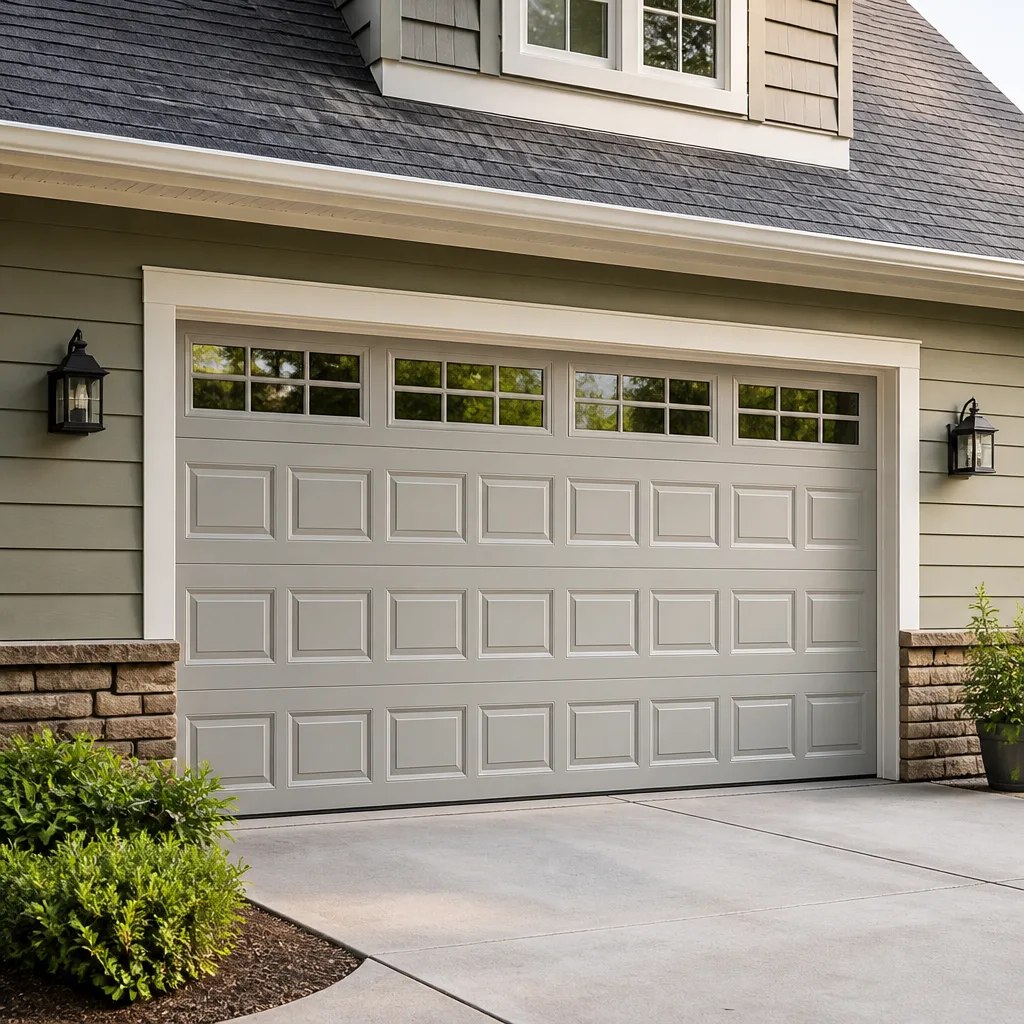 Raised-panel steel
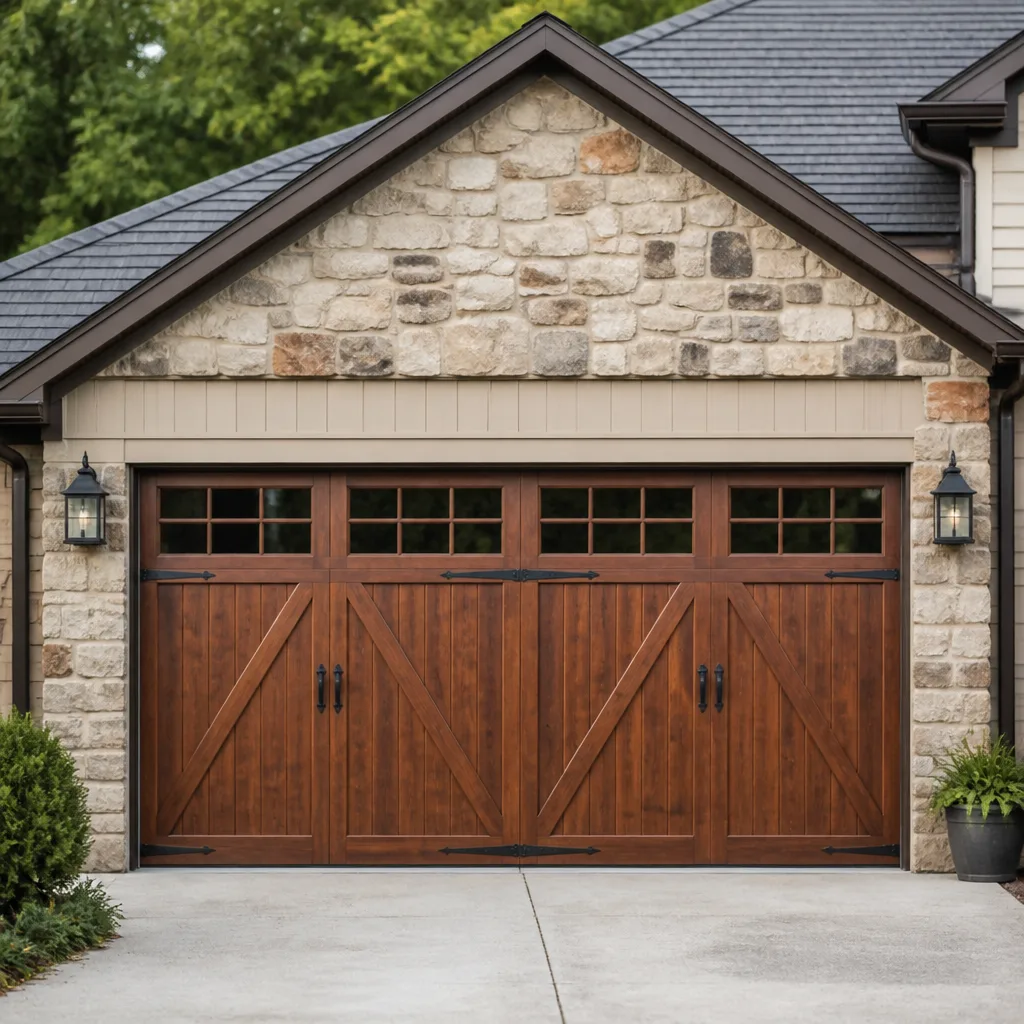 Carriage house
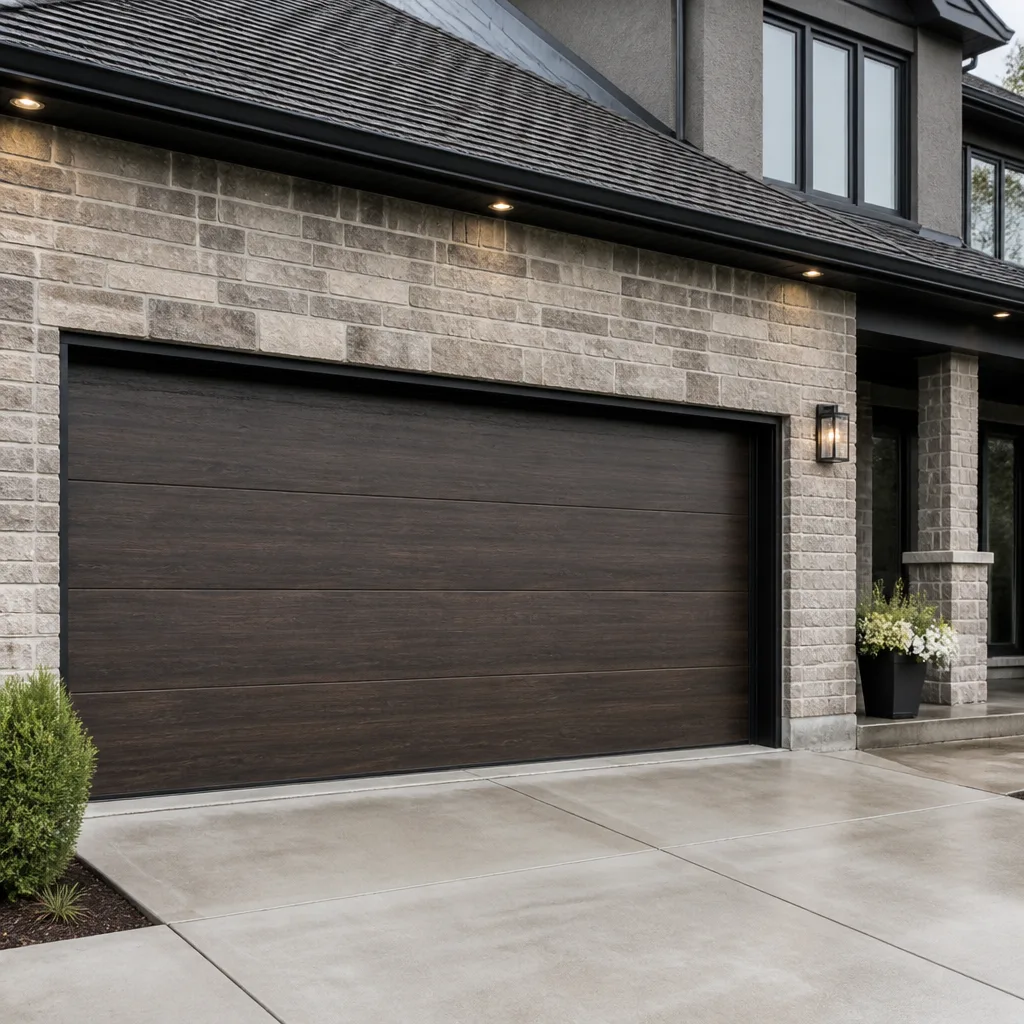 Modern flush
 Full-view glass
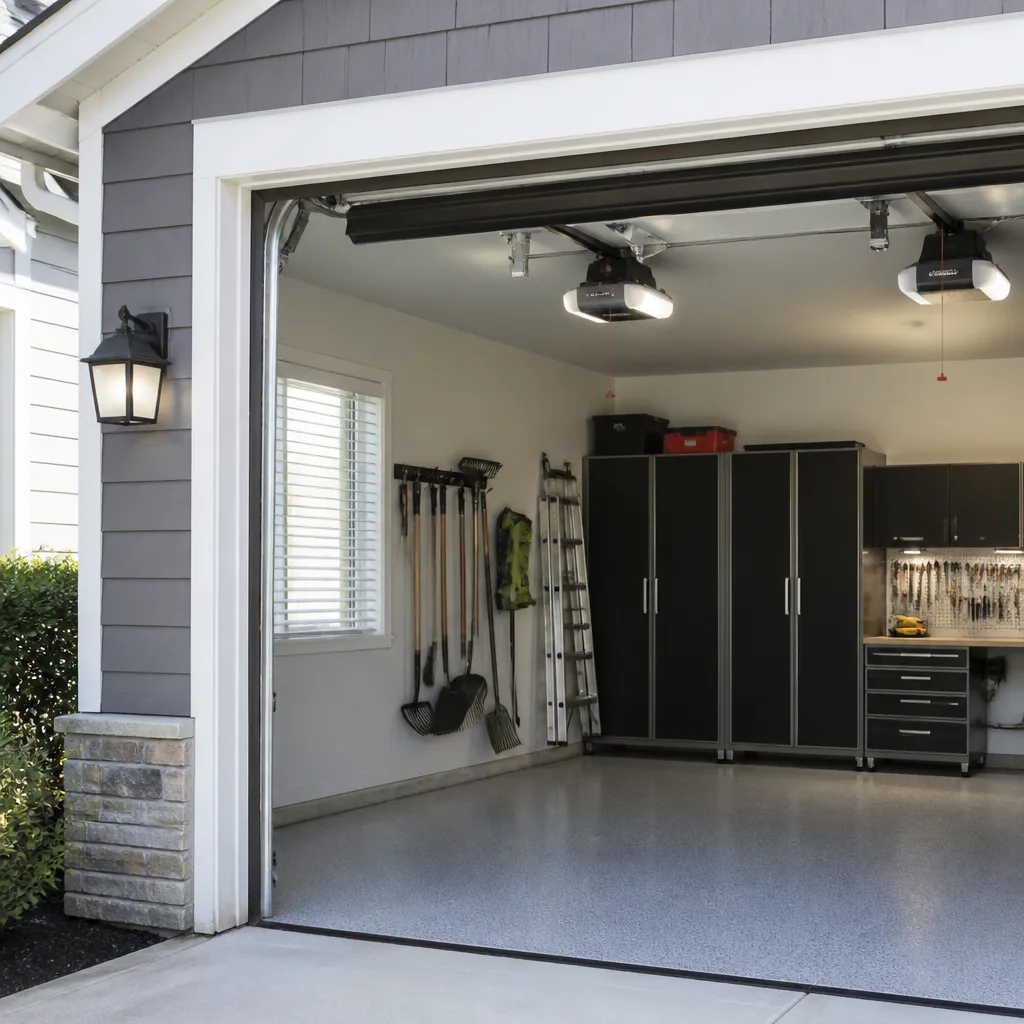 LiftMaster openers
 Chamberlain openers
Full 25-point door and opener safety check with every visit - springs, cables, rollers, tracks, and your LiftMaster or Chamberlain opener included
You get a price before we start. It does not change when the truck arrives.
Get your free estimateDIY vs Professional Garage Door: The Dallas Homeowner’s Decision Guide
A torsion spring on a standard residential garage door holds enough stored energy to break a wrist or fracture a forearm when released incorrectly. The Consumer Product Safety Commission documents hundreds of garage door spring injuries every year, yet a quick search for “garage door spring repair” returns thousands of videos showing the procedure without a word about what happens if the winding bar slips. This guide draws the line task by task, because treating every garage door job as either “always hire someone” or “anyone can do this” leads to unnecessary spending on one side and real harm on the other. For more guides & resources, see our blog. If you live in Dallas, where summer heat degrades springs faster than the national average and winter cold snaps stiffen rollers and tracks, the decision matters more than it would in a milder climate.
Styles & brands we work with
Quick Answer
Most Dallas homeowners can safely handle lubrication, sensor alignment, limit switch adjustments, and weatherstripping replacement with basic tools and thirty minutes of attention. Torsion spring winding, cable drum replacement, and track realignment under load require a trained technician with the right tools and experience. The dividing line is not cost, it is stored energy and the consequences of a mistake.
Table of Contents
- The Real Dividing Line: Risk, Not Price
- Tasks a Capable Homeowner Can Do Safely
- Tasks That Require a Trained Technician
- The True Cost of DIY: Parts, Time, and Rescue Calls
- When DIY Voids a Warranty or Insurance Claim
- The Middle Path: Prep Work That Reduces Your Invoice
- How to Be an Informed Participant in a Professional Repair
- Dallas-Specific Factors That Change the Equation
- Common Mistakes to Avoid
- When to Call a Professional
- Frequently Asked Questions
- The Bottom Line
The Real Dividing Line: Risk, Not Price
The DIY-versus-professional conversation usually starts with money. For a detailed look at pricing, see our Garage Door Cost Breakdown: The Dallas Homeowner’s Reference for 2026. What does the part cost at Home Depot versus what does a garage door company charge? That framing misses the actual question, which is about energy and consequence. Some garage door components are under zero tension and forgiving when you make a mistake. Others are under hundreds of pounds of stored force and punish errors in ways that an emergency room bill will not make cheaper.
Here is the distinction we use when a Dallas homeowner asks us whether a job is DIY territory:
- No stored energy, low consequence of error: Lubricating hinges and rollers, cleaning the photo-eye sensors, replacing weatherstripping, tightening visible bolts. A mistake costs you a few minutes or a few dollars.
- Stored energy, high consequence of error: Torsion springs, extension springs with cables under load, cable drums, lift cables themselves. A mistake can cause serious injury or cause the door to come down uncontrolled.
- Moderate consequence, skill-dependent: Limit switch adjustment, opener force settings, roller replacement. These can go either way depending on your mechanical aptitude and whether you follow the manual.
We have been repairing garage doors in Dallas long enough to see the full range. We have seen a homeowner swap out a worn roller in twenty minutes and save himself a service call. We have also seen a homeowner attempt a torsion spring replacement with screwdrivers instead of winding bars, and the result was a spring that unwound violently and a door that ended up off its track, wedged halfway up the opening. The second job cost more than if it had been called in originally.
That is the actual split. Not “never do it yourself” and not “you can do anything with YouTube.” It is knowing which side of the line a given task sits on.
Tasks a Capable Homeowner Can Do Safely
These jobs do not require disassembling anything under tension. They need basic tools, reasonable patience, and attention to the manufacturer’s instructions. None of them poses a meaningful injury risk when done correctly.
1. Lubrication of Hinges, Rollers, and Springs
Dallas dust and heat combine to dry out metal components. A garage door that squeaks or groans is usually telling you it needs lubrication. Use a lithium-based grease on the hinges and a spray lubricant on the rollers and springs. Do not use WD-40 as a primary lubricant; it is a water displacer and dries out quickly. This job takes fifteen minutes and should be done twice a year in Dallas’s climate. The rollers that sit in metal tracks do not need grease inside the track itself; greasing the track attracts dust and creates a paste that makes the door run worse.
2. Photo-Eye Sensor Alignment
If your opener starts to close and then immediately reverses, the first thing to check is the photo-eye sensors mounted near the floor on either side of the door. Dust, a bump from a trash can, or a child’s bicycle can knock them out of alignment. Each sensor has a small indicator light. When both lights are steady, the sensors are aligned. When one blinks or goes dark, the beam is broken or the lens is dirty. Wipe the lenses with a dry cloth, loosen the wing nut holding the sensor bracket, and adjust the sensor until the light turns steady. This takes five minutes and requires no tools beyond a cloth and your hands.
3. Limit Switch Adjustment
If the door does not close all the way, or closes and then reverses, or does not open fully, the limit switch may be the culprit. This is a small adjustment screw or dial on the opener motor unit, usually marked “up” and “down.” The owner’s manual for your specific opener model will show the location. Make small adjustments, a quarter turn at a time, and test the door after each adjustment. Be patient. This job is safe because the opener motor is not under the same kind of load as the springs, but it does require following the manual rather than guessing.
4. Weatherstripping Replacement
The rubber strip along the bottom of the door and the weatherstripping along the outside of the door frame degrade in Dallas heat. Replacement is tedious but simple. Pull out the old strip, slide in the new one, and trim to length with a utility knife. Bottom seal replacement depends on whether your door has a retainer track you slide the new seal into or a style that screws on. Either way, this is a one-person job that costs $15 to $40 in materials and takes under an hour. It improves energy efficiency and keeps out the Dallas dust and the occasional heavy storm.
5. Tightening Loose Hardware
Garage doors cycle thousands of times a year, and vibration loosens bolts and nuts over time. Go around the door with a socket set and check the bolts on the hinges, the brackets, and the track mounting points. Snug anything that is loose. Do not over-tighten; you are looking for firm, not forced. This is preventive maintenance that takes twenty minutes and prevents larger problems.
Tasks That Require a Trained Technician
These are the jobs where the energy in the system is not forgiving. In our experience, these are also the jobs that most frequently appear in “I tried to fix it myself” stories that end with a more expensive repair than the original problem.
1. Torsion Spring Winding and Replacement
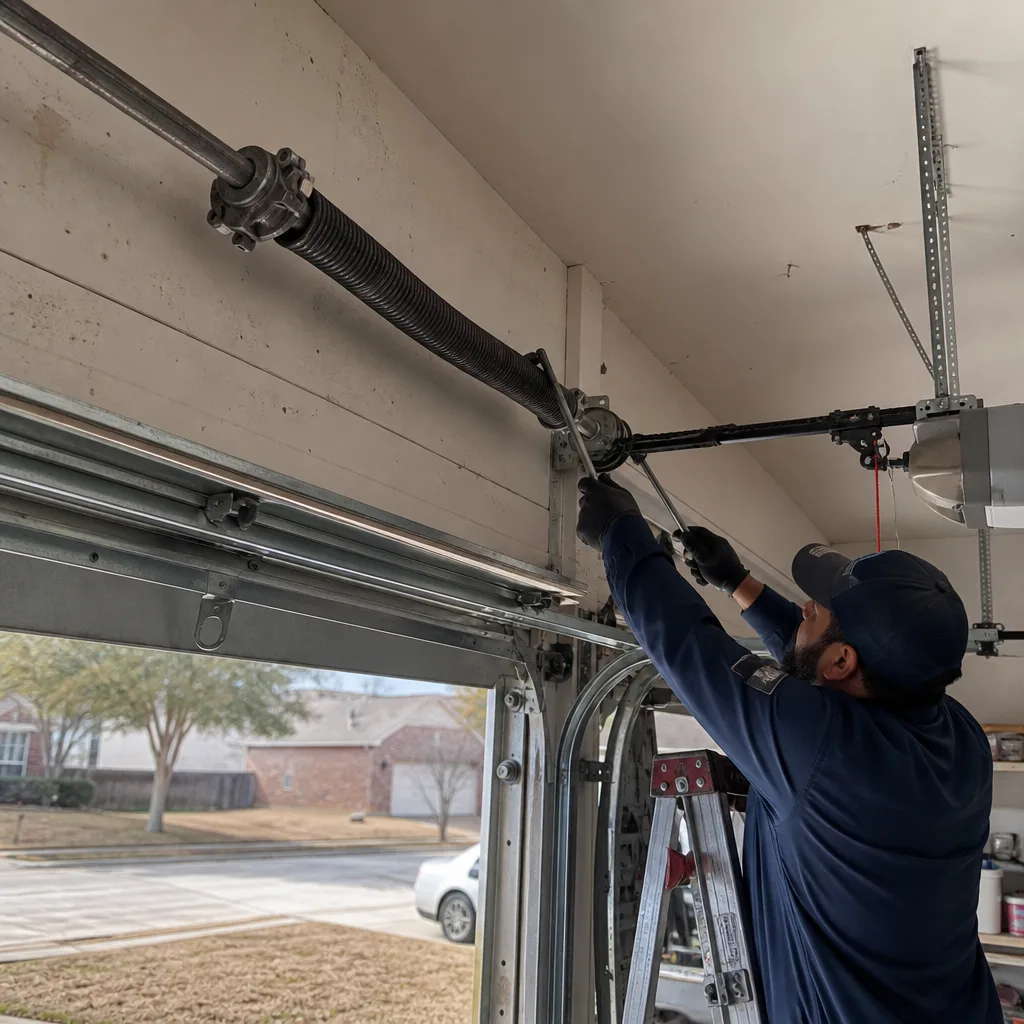
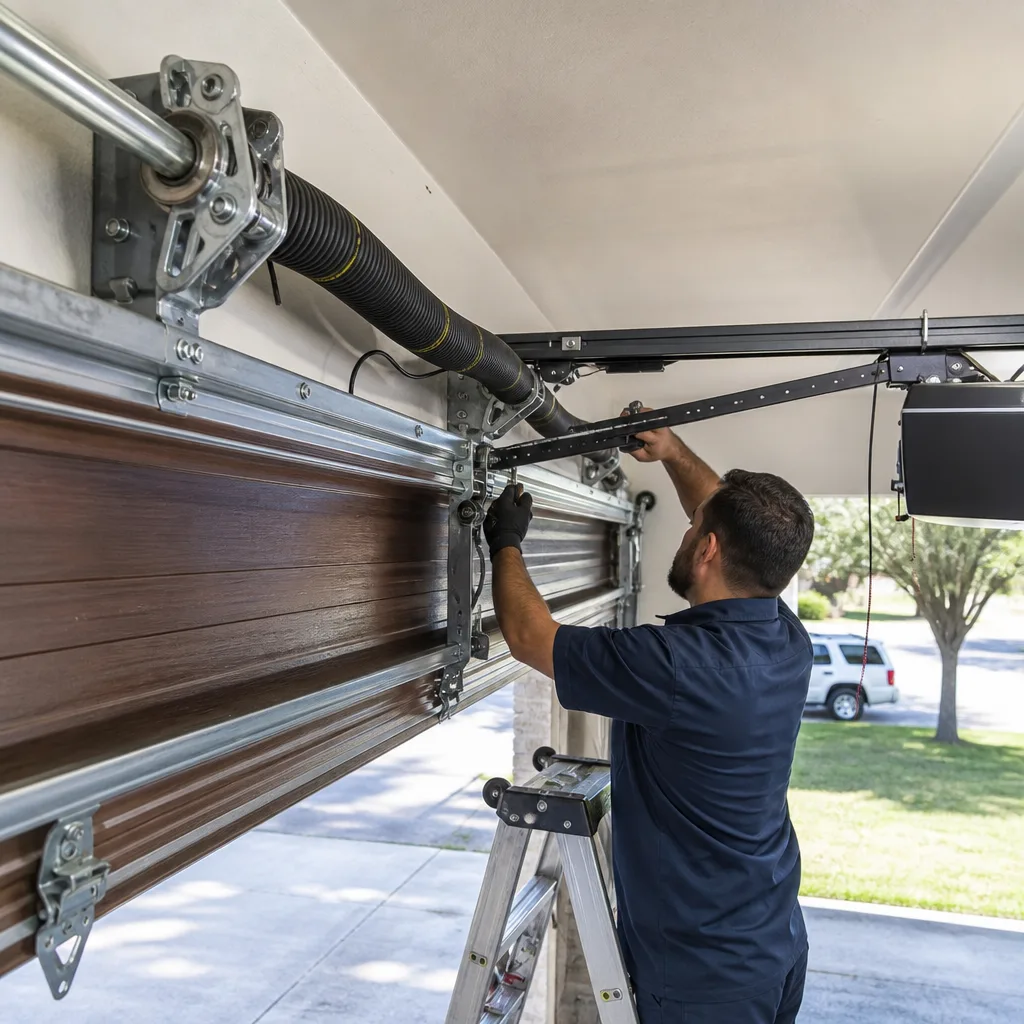
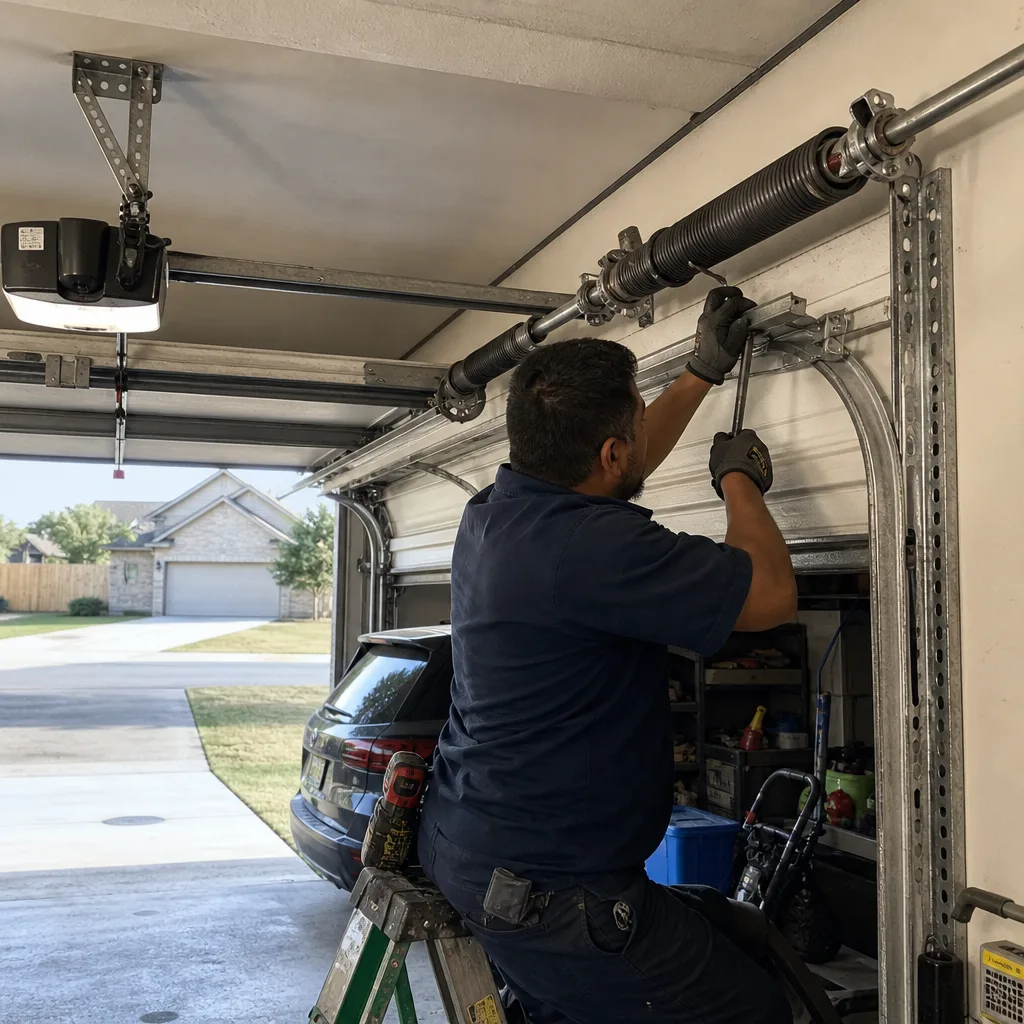
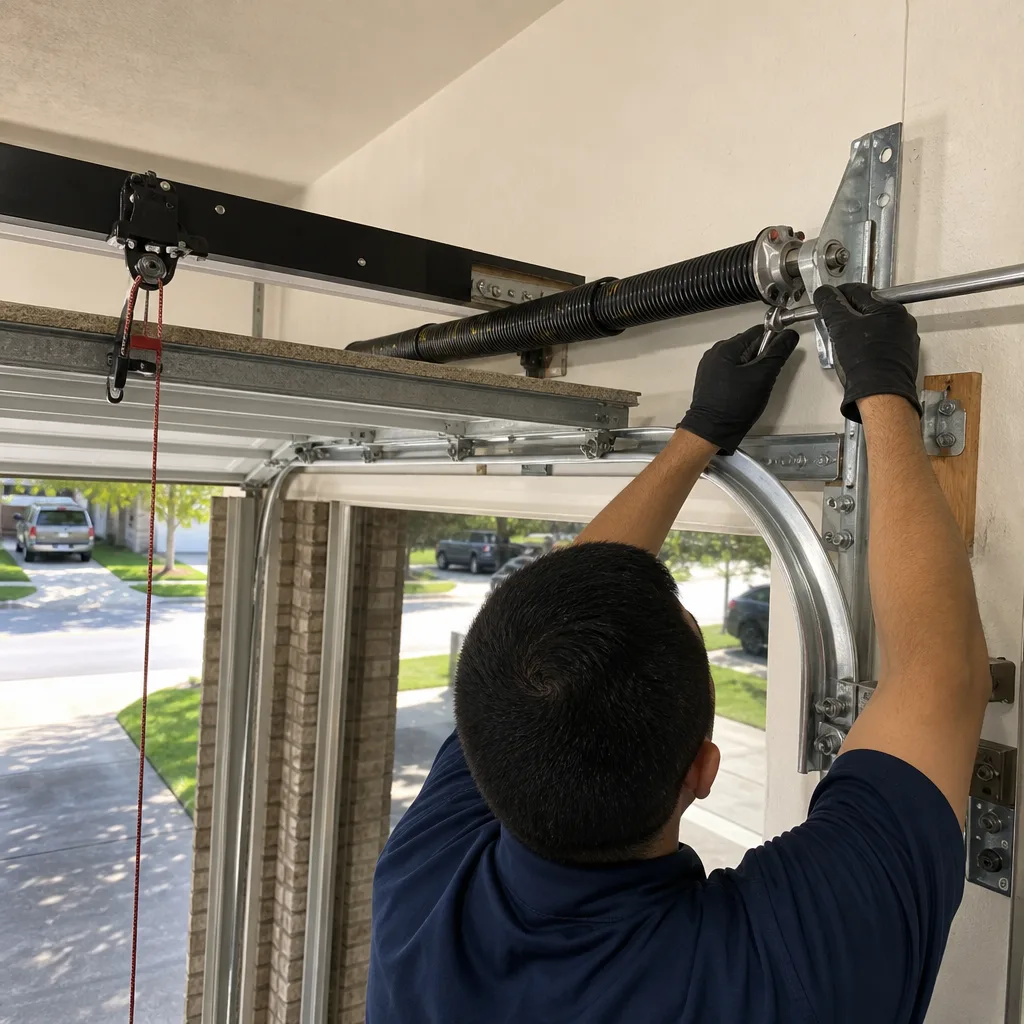
The torsion spring is the thick coiled spring mounted above the door on a metal shaft. It is what bears most of the lifting load. When the door is down, that spring is wound tight and holding a significant amount of torque. Winding or unwinding it requires two steel winding bars of the correct diameter, inserted one at a time into the winding cone, and a specific sequence of quarter turns. If a bar slips, the cone spins with the full force of the stored energy. This is the injury scenario the CPSC documents. We do not recommend any homeowner attempt this without proper training and tools. This is not a question of mechanical aptitude; it is a question of what happens when something slips.
2. Cable Replacement and Cable Drum Work
The lift cables run from the bottom brackets up to the cable drums at each end of the torsion shaft. They are under full tension when the door is down. If a cable snaps or comes off the drum, the door can drop suddenly. Replacing a cable involves releasing the spring tension first, which loops back to the torsion spring risk. In Dallas, cable problems are common because heat and humidity cause rust and fraying, especially in older doors. If you see frayed strands on a cable, stop using the door and call a technician. A frayed cable can snap without warning.
3. Track Realignment Under Load
Tracks guide the rollers, but they also hold the door in place laterally. If a track is bent or knocked out of alignment while the door is under spring tension, attempting to bend it back or loosen the mounting brackets can release the door unexpectedly. The door weighs between 130 and 400 pounds depending on size and material. You do not want that weight moving unpredictably. A technician will release the spring tension before working on tracks, which is a step most homeowners do not have the tools or knowledge to perform safely.
4. Opener Replacement with Force Settings
Replacing an opener is theoretically within reach for a capable homeowner, but the force settings are the critical part. If the down force is set too high, the opener will not reverse when it hits something, and that something could be a child, a pet, or an object. Federal safety standards require openers made after 1993 to reverse when they contact an object or when the photo-eye beam is broken. Setting the force wrong effectively disables a safety system. We recommend having a technician handle opener replacement and calibration, or at minimum having a professional check the settings after a DIY installation.
The True Cost of DIY: Parts, Time, and Rescue Calls
The math on DIY garage door repair usually looks simple: part from a retail store versus quote from a garage door company. But the real accounting includes three other lines.
Part markup at retail versus trade pricing: A torsion spring sold at a big-box retailer in Dallas might cost $50 to $80. A garage door company pays less because they buy in volume from suppliers. But the company’s price includes the labor, the winding bars, the knowledge of which spring size and wire gauge matches your door, and the liability if something goes wrong. When you buy the spring yourself, you are also buying the responsibility for getting the size right. Garage door springs are not one-size-fits-all. They are sized by door weight, height, and spring wire diameter. Getting the wrong spring means the door will not balance, which puts extra load on the opener motor and shortens its life.
The value of your time: A homeowner watching a YouTube video, buying parts, and attempting a repair for the first time might spend four to six hours on a job a technician completes in under an hour. If your time has value, and you are taking time away from work or family, the hourly math changes quickly.
The rescue call: This is the line most DIY cost estimates leave out. If a homeowner gets halfway into a spring replacement and realizes the bar is slipping or the spring is not winding evenly, they will call a garage door company in Dallas. The technician now has to deal with a partially disassembled door, possibly unwound springs, and the original problem. The rescue call typically costs more than the original repair would have, because it involves diagnosis, correction, and liability on a system the homeowner has altered.
Here is a realistic cost comparison for a torsion spring replacement in Dallas:
- DIY: $50-$80 for the spring, $20 for two winding bars, plus four to six hours of your time. Cost if successful: $70-$100. Cost if it goes wrong: $250-$450 for a rescue call, plus possible medical costs, plus a garage door that is out of service until help arrives.
- Professional: $180-$340 in the Dallas market, depending on spring size and door weight. Includes labor, correct parts, a written guarantee, and no risk of injury to you.
The gap is not as wide as the part price suggests. And when the rescue call enters the picture, DIY is the more expensive option.
When DIY Voids a Warranty or Insurance Claim
Two documents matter before you pick up a wrench: your opener or door manufacturer’s warranty, and your homeowner’s insurance policy. Also check our Garage Door Permits, Codes & Inspections in TX: What You Need to Know for regulatory requirements.
Manufacturer warranties: LiftMaster, Chamberlain, Genie, Clopay, Amarr, Wayne Dalton, and other major brands all write installation and service requirements into their warranty language. Many state that the door or opener must be installed and serviced by a qualified technician, or that the warranty covers parts only when installed to the manufacturer’s specifications. A DIY spring replacement that uses the wrong spring size or installs it incorrectly can void the warranty on the door and the opener. If the door later fails because of the incorrect spring, the manufacturer will point to the unauthorized service and deny the claim. Some brands are explicit about this; others hide it in the fine print, but the practical result is the same.
Homeowner’s insurance: Most Dallas homeowner’s policies cover garage door damage from covered perils like storms, fire, or vehicle impact. But they expect that repairs are done by licensed or qualified contractors. If a homeowner performs a repair and that repair fails, causing further damage or injury, the insurance company may deny the claim on the grounds of negligence or improper maintenance. This is especially relevant in Dallas, where spring and cable failures are common and storm damage prompts frequent claims. Check your policy for language about “qualified repair professional” or “reasonable maintenance” before attempting a structural repair.
Specific language to check: Look for exclusions related to “self-performed repairs,” “unpermitted work,” or “improper installation.” Also check the section on “duties after loss” – if you attempt a repair and make the situation worse, the insurer may argue you failed to mitigate the loss. None of this applies to the safe DIY tasks listed earlier. Lubrication and sensor alignment will not void anything. Spring replacement is a different category.
The Middle Path: Prep Work That Reduces Your Invoice
There is a middle option between doing the repair yourself and simply writing a check. Most Dallas homeowners do not know that they can meaningfully reduce a professional’s billable time by preparing for the visit. Here is what we tell our own customers at Brock Garage Doors Dallas home: the less time a technician spends on discovery and access, the lower your invoice.
- Clear the area around the door: Move vehicles out of the garage, clear boxes and storage away from the tracks and the opener, and make sure there is a clear path to the door. Technicians bill for time on site, and moving your belongings is time you should not be paying for.
- Photograph the existing hardware: Take clear photos of the springs, cables, brackets, and opener model plate before the technician arrives. This gives the tech a head start on diagnosis and part selection. It also gives you a record of the condition before work started.
- Find the model number: The opener model number is usually on a sticker on the motor unit. The door manufacturer’s label is often on the inside of the door near the bottom panel or on the track. Having these ready saves the technician ten to fifteen minutes of identification.
- Test the door yourself and write down what happens: Does it open but not close? Does it reverse halfway down? Is there a grinding noise? Specific symptoms help the technician diagnose faster than a vague “it’s broken.”
This prep work is where a homeowner adds genuine value without taking on risk. For a full list of safe tasks, see our Garage Door Repair Maintenance Checklist for Dallas Homeowners. You are not touching anything dangerous. You are making the professional’s job faster, and in a trade that runs on time, faster means less expensive.
How to Be an Informed Participant in a Professional Repair
You do not need to know how to wind a torsion spring to be a sharp customer. You need to know enough to verify that the work was done correctly without doing the work yourself. This is the difference between being knowledgeable and being the person who oversteps and creates liability.
Ask for a written price before work starts. This is the single most important step. The number should be on paper, not verbal, and it should match the invoice when the job is done. If a company refuses to put the price in writing, that is a signal. At Brock Garage Doors Dallas, every repair is quoted and agreed in writing before any work begins, and that number does not change when the job is done.
Ask about the guarantee. What happens if the repair fails in three weeks? In three months? The answer tells you whether the company stands behind its work or plans to charge you for a callback. Our repairs are covered by a 365-Day Done Right Promise, in writing, on every job. If the repair fails within a year, we return and correct it at no charge.
Know what a balanced door feels like. After a spring replacement, the door should stay in place when opened halfway and released. If it drops, the spring is under-wound or the wrong size. If it rises, it is over-wound. A technician should test this before leaving, and you should see the test happen.
Ask to see the old parts. A spring, cable, or roller that is being replaced should be handed to you or left for your inspection. This is a basic transparency check, and any quality shop will do it without being asked.
Know the brands: Technicians should be familiar with the major brands on the market, including LiftMaster, Chamberlain, Genie, Clopay, Amarr, Wayne Dalton, and Craftsman. A technician who works on all of them can apply the right fix to your specific system rather than a generic workaround. Our team is trained on eight major brands for exactly that reason.
You are not expected to know the torque specs on a torsion spring. You are expected to know what a written price looks like, what a guarantee means, and how to tell if the door is working correctly when the tech leaves.
Dallas-Specific Factors That Change the Equation
Garage door wear is not the same in every city. Dallas has a specific set of conditions that make some failures more likely and some DIY tasks less forgiving.
Heat and spring fatigue: Torsion springs are rated for a certain number of cycles, typically 10,000. But the rating assumes normal operating conditions. Dallas summers, with weeks of 100-degree heat radiating into uninsulated garages, accelerate metal fatigue. We see springs in Dallas that fail years before their rated cycle count because the heat weakens the steel over time. The same spring in Minneapolis or Seattle would last longer. This means Dallas homeowners face spring replacement more often than the national average, which makes the DIY temptation more frequent, even though the danger is not reduced by familiarity.
Dust and grit: North Texas is dry and windy. Fine dust settles into tracks, hinges, and rollers. If the tracks are not cleaned regularly, the rollers grind against the grit and wear faster. This is a maintenance issue that homeowners can address themselves with a cloth and a vacuum, and it is a case where regular DIY maintenance genuinely reduces the need for professional repair.
Storm season: Spring in Dallas brings severe thunderstorms, high winds, and occasional hail. Garage doors take direct hits. Wind can knock tracks out of alignment or blow debris into the path of the door. After a storm, check the door’s balance and the tracks before using the opener, and if something looks off, call before operating the door repeatedly. Repeated operation with a damaged track can turn a $150 repair into a $500 replacement.
Built environment and garage age: Dallas has a wide mix of housing stock, from 1960s ranch homes with original single-panel doors to new construction in Collin and Denton counties with insulated sectional doors. Older doors are heavier and more likely to be using outdated spring systems. Newer doors are lighter but more sensitive to improper spring sizing. A homeowner in a 1970s Lake Highlands home has a very different door than one in a 2022 Frisco build, and the right approach differs accordingly.
The practical takeaway for Dallas homeowners: the tasks worth doing yourself are the high-frequency, low-risk maintenance items that combat heat and dust. The tasks to hand off are the ones where Dallas’s climate has already put the component under more strain than average.
Common Mistakes to Avoid
- Using the wrong lubricant on the springs and rollers. WD-40 is not a garage door lubricant. It dries out quickly and leaves components unprotected. Use a white lithium grease or a dedicated garage door spray lubricant. A homeowner who uses the wrong product will have a squeaky door again within weeks.
- Attempting spring work with improvised tools. Winding bars are not a suggestion; they are a safety requirement. Screwdrivers, Allen wrenches, and rebar are not substitutes. A bar that slips under tension is the direct cause of most garage door spring injuries.
- Disconnecting the opener without releasing tension. When an opener is disconnected while the door is under spring tension, the door can move suddenly. This is a common mistake in DIY opener replacements. Always ensure the door is fully down or the spring tension is released before disconnecting anything.
- Greasing the tracks. Garage door tracks are not meant to be lubricated. Grease in the track attracts Dallas dust and turns it into an abrasive paste that increases roller wear. Rollers get the lubrication, not the track.
- Ignoring a frayed cable. A cable with visible fraying is a countdown. It will snap, and when it does, the door can drop suddenly. Homeowners sometimes see the fraying and continue using the door for weeks. That is not maintenance; that is a gamble.
- Adjusting the force settings too high to fix a reversing door. If the door reverses when closing, the problem is usually a sensor obstruction or a limit switch, not inadequate force. Cranked-up force settings override a safety system and create a serious injury risk. Fix the actual problem instead of defeating the safety mechanism.
- Replacing a spring without checking the door balance afterward. A spring replacement is not done when the last bolt is tightened. The door must be tested by lifting it halfway and releasing it. If it does not stay, the work is incomplete, and the opener motor is now carrying the difference.
When to Call a Professional
Call a garage door professional when the task involves anything under tension: torsion springs, extension springs, lift cables, or cable drums. Call when a track is bent or misaligned and the door is still under spring load. Call when the opener fails and the force settings need to be calibrated to federal safety standards. Call when you see fraying on a cable, when the door is off balance, or when the door has come off its tracks entirely. Call when you have already attempted a repair and the situation has not improved.
If you are in Dallas and uncertain which side of the line a problem falls on, the fastest way to find out is to call and describe the symptoms. Garage Door Repair in Dallas is exactly the kind of work where a short phone conversation can save you from a costly mistake. Brock Garage Doors Dallas offers free estimates in Dallas. Call (254) 269-5837 and tell us what the door is doing. We will tell you whether it is safe to handle yourself or whether you should leave it alone until we arrive.
Frequently Asked Questions
Torsion spring repair is not recommended for DIY work because the spring is under several hundred pounds of stored tension, and a mistake can cause serious injury. Lubricating the spring is safe and worthwhile, but winding or replacing it requires proper winding bars and hands-on training. If the spring has snapped or unwound, call a professional. We offer garage door repair throughout Dallas with the price in writing before any work starts.
Most cable repairs in Dallas run $150 to $275, depending on cable type, drum condition, and whether the job requires spring tension release first. If the cable has snapped and the door is stuck, the cost can be higher because the technician has to safely release the remaining tension and realign the door before installing the new cable. Our garage door cable repair service in Dallas is quoted in writing before we begin, and the price you approve is the price you pay.
You can, but the force settings on a modern opener are calibrated to federal safety standards, and setting them incorrectly disables the auto-reverse feature that prevents the door from closing on people and objects. If you install an opener yourself, have a professional inspect the force settings and the photo-eye alignment afterward. Alternatively, have the opener installed by a technician who will set it correctly and show you how to test it. Our team has handled garage door opener repair in Dallas on all major brands, including Genie and Chamberlain.
It can, depending on your policy language and the nature of the work. Most policies expect repairs to be performed by qualified contractors, and a claim that results from a botched DIY repair can be denied on negligence grounds. Check your policy for exclusions related to self-performed repairs or improper maintenance before attempting anything beyond routine lubrication or cleaning.
The most common mistake we see is a homeowner replacing a torsion spring with the wrong size because they matched the physical length rather than the wire gauge and inner diameter. A spring that looks similar but is the wrong size will not balance the door, and the opener motor ends up carrying the load. The second most common mistake is using grease on the tracks, which combines with Dallas dust and accelerates roller wear.
Yes, our technicians carry the most common springs, cables, rollers, and brackets on the truck, along with the tools needed for the job. Most repairs are completed on the first visit. For less common parts, we source them quickly from Dallas-area suppliers and schedule a return visit, quoted in writing before any work begins. Call (254) 269-5837 for a free estimate and we will give you a direct answer about your specific door.
The Bottom Line
The DIY versus professional question is not a blanket rule. It is a line drawn between tasks with no stored energy and forgiving failures, and tasks where the energy in the system can hurt you. Lubrication, sensor alignment, limit adjustments, and weatherstripping are fair game for a Dallas homeowner with basic tools and thirty minutes. Torsion springs, cables, drums, and loaded tracks belong to trained technicians with proper equipment. The cost difference narrows when you account for your time and the price of a rescue call. The warranty and insurance risk further tips the scale. Know which side of the line you are on, do the safe maintenance yourself, and bring in a professional for the rest. Your garage door is the heaviest moving object in your home. Treat it with respect, and it will treat you well for years.
Written by Wade Mercer, Owner at Brock Garage Doors Dallas, serving Dallas since 2001.
See the difference
 Before
 After
After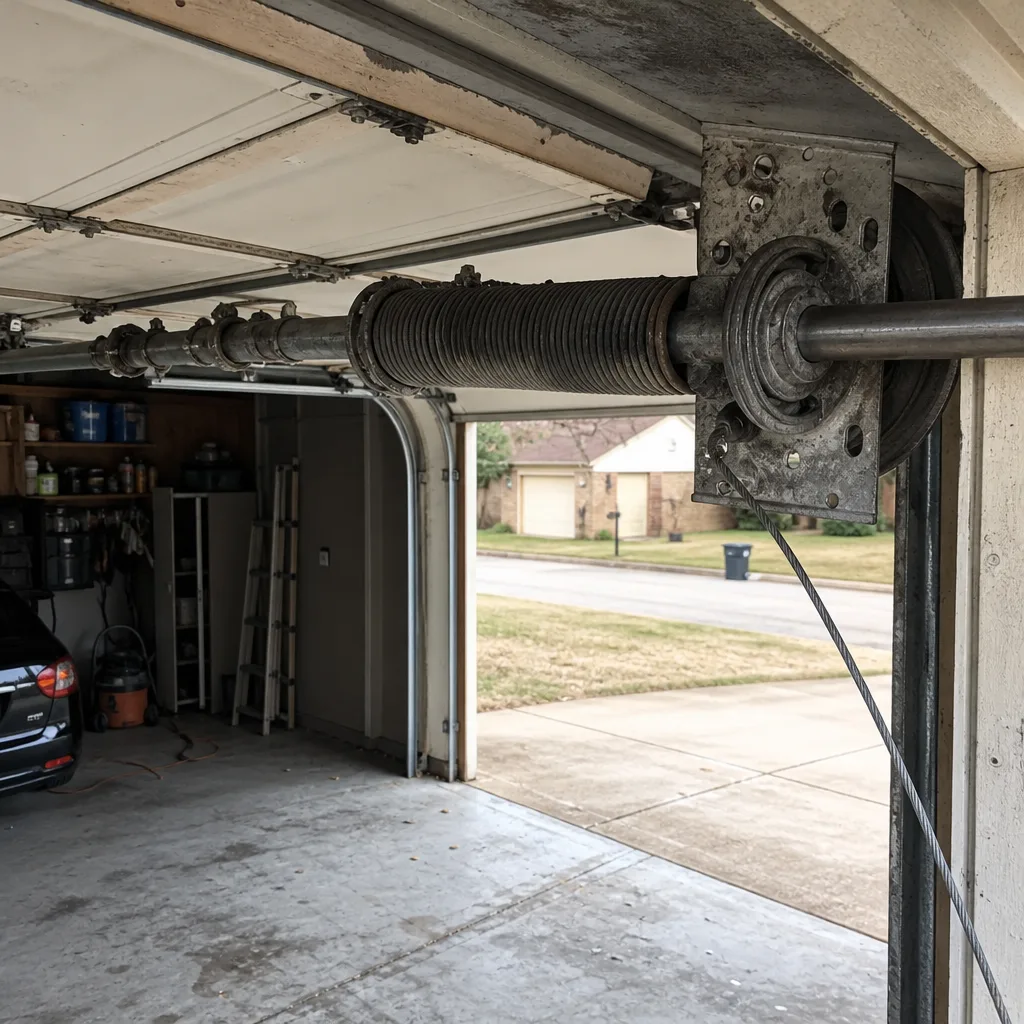 Before
 After
After Before
 After
After